The Weight of a Name

I have ADHD, which means my mind has never been very good at leaving things alone.

It catches on the smallest details, things most people probably wouldn’t give a second thought to, and before I know it I’ve spent an hour turning one little idea over and over in my head. It’s why I end up wondering why some places feel like home long after you’ve left them, why certain songs can carry entire years inside of them, or why a single photograph can make your chest ache in a way you can’t quite explain.

This time, it was titles.

Not the kind you put on a résumé or a business card, but the ones we give each other. Friend. Best friend. Brother. Sister. Family.

The more I thought about them, the more one word refused to leave me alone.

Friend.

Maybe it’s strange to spend this much time thinking about a single word. Then again, I’ve never really believed words were just words. They’ve always felt heavier than that to me. They carry memories. Promises. Expectations. Sometimes they carry grief. Sometimes they carry home. A word can become so intertwined with a person that hearing it years later still brings them to mind.

That’s why I think so much about them.

Lately, I’ve realized something that surprised me.

I think I’d rather be called a friend than a best friend.

Not because I don’t value the people closest to me. Quite the opposite, actually.

It’s because I’ve started wondering if we’ve made “best friend” so common that it’s begun to lose some of the weight it once had. It’s everywhere now. Captions, conversations, introductions, birthday posts. It has become the default way of telling someone they’re important to us. Maybe that’s enough for most people, and I don’t think there’s anything wrong with that. This isn’t me saying people shouldn’t use it.

I just don’t think it’s ever been the word that meant the most to me.

I’ve never really understood why friendship became something we rank.

Maybe that’s human nature. We like putting things into neat little categories. First place. Second place. Best. Favorite. Closest. We do it with books, movies, songs, restaurants, photographs. We like lists because they make the world feel organized.

But people have never felt like lists to me.

Every friendship has asked something different of me. Every person has walked into my life carrying different joys, different wounds, different stories. Some friendships have been loud and adventurous. Others have been built almost entirely on quiet conversations and comfortable silence. Some lasted only a season but changed me forever. Others have quietly stretched across years, surviving distance, changing schedules, different versions of ourselves, and all the ordinary ways life slowly rearranges people.

How do you rank something like that?

How do you decide which friend mattered more?

The one who sat beside you during the darkest season of your life?

The one who reminds you to laugh when you’ve forgotten how?

The one who lives hundreds of miles away but still feels strangely close?

The one who understands your silence well enough to know it doesn’t always need to be filled?

I don’t think I could.

Maybe that’s why the word friend has always sounded complete to me. It has never felt like a title waiting for another word to make it more important.

If anything, I think we’ve forgotten how beautiful friendship actually is.

There are very few relationships where the only thing keeping two people together is their continued desire to know one another. Friendship is one of them, and I think that’s part of what makes it so extraordinary. Every day, without ever talking about it, we simply decide whether we’ll continue making room for another person in our lives.

That feels sacred to me.

Maybe it’s because I’ve watched how easily life changes people.

I’ve watched friends move away.

I’ve watched careers consume time that used to belong to conversations.

I’ve watched marriages, children, grief, illness, loss, and distance reshape lives in ways no one could have predicted.

I’ve learned that loving someone doesn’t guarantee you’ll always walk beside them. Sometimes life simply carries people in different directions, no matter how much they wish it wouldn’t.

Maybe that’s why I value the ones who continue choosing each other.

Not perfectly.

Not constantly.

Just… consistently.

I don’t think friendship is measured by how often you see each other or how quickly someone replies to a message. Life gets busy. People become overwhelmed. Seasons change. The older I get, the more grace I find myself wanting to give the people I love.

Instead, I think friendship is measured in quieter ways.

It’s remembering.

It’s continuing to reach for someone after months have slipped by.

It’s learning how someone changes without expecting them to stay exactly the same.

It’s making room for the person they’re becoming instead of mourning the person they used to be.

It’s believing a relationship is worth tending to, even when life doesn’t make it easy.

Those things don’t usually come with announcements.

Most people will never notice them.

But I think that’s where friendship quietly lives.

Maybe that’s why titles matter less to me now than they used to.

When I think about the people I treasure most, I don’t think about what we’ve called each other over the years. I think about the roads we’ve walked together. I think about the conversations that lasted long after the sun disappeared. I think about the moments one of us needed someone, and the other simply showed up. I think about all the ordinary days that seemed insignificant while we were living them, only to realize later they had become the memories we missed the most.

That’s what gives a title its weight.

Not the word itself.

Everything that came before it.

So if you ever introduce me as your friend, I don’t think I’ll hear something smaller than “best friend.”

I’ll hear years.

I’ll hear trust.

I’ll hear every ordinary Tuesday that slowly became a lifetime of knowing another human being.

Because to me, friendship has never been an ordinary thing.

It’s one person looking at another in a world where everyone is constantly changing, constantly moving, constantly leaving pieces of themselves behind, and quietly deciding,

“I’d still like to keep knowing you.”

I don’t know if there’s a greater compliment than that.

The Sky Did Not Choose

I sat outside
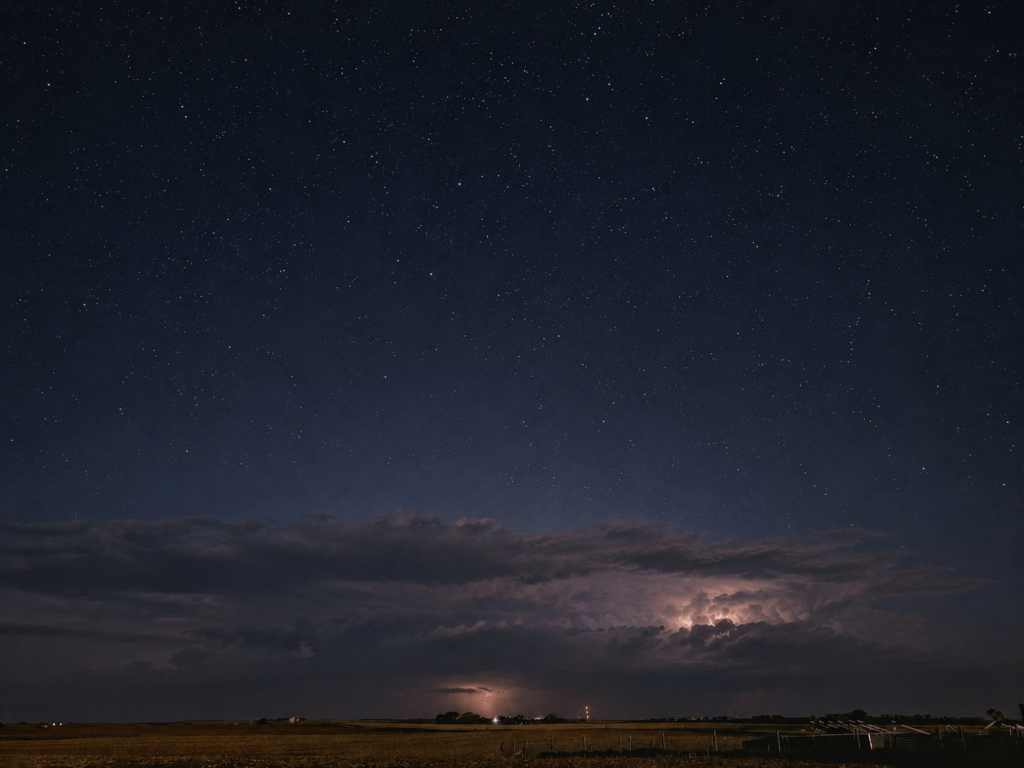
while lightning flickered through the clouds
in soft silver veins,
the kind that never touch the ground
but still make the whole sky feel alive.

The air was warm from the day,
but the wind had started turning cool,
moving through the fields and against my skin
like the earth itself was exhaling.

Above the storm,
the stars stayed bright.
Steady. Unmoving.

And below them
the clouds kept flashing with distant power,
like some ancient battle was unfolding
just beyond the horizon.

It should have felt violent.
Instead, it felt holy.

As if heaven itself could hold
both chaos and peace
at the same time.

I could not stop looking at it —
the stars beside the storm,
the beauty beside the ruin,
the quiet beside the power.

Because the stars did not disappear for the lightning.
The sky did not choose between wonder and ruin.
It carried both.
It survived both.

And sitting there beneath it,
with the wind in my hair
and the storm glowing softly against the dark,
I think some part of me wanted to believe
that maybe I could too.

Not Everyone Who Leaves Stops Loving It

A friend recently sent me a letter about camp leadership and the expectations that come with it, and I think part of me has been grieving it ever since.

Not because it was new information. Not because it shocked me. But because it finally gave words to something I have carried quietly for years.

There is this unspoken thing at camp where people leave pieces of themselves behind long after they are gone. A certain laugh in the dining hall. A tradition they started. A way they made children feel safe. Some people become so deeply woven into camp that their absence never really feels like absence at all. They become stories people tell around campfires years later. Memories repeated so often they almost stop sounding human and start sounding holy.

And then someone new arrives.

Young. Nervous. Trying so hard.

And everyone expects them to somehow step perfectly into the shape of the person before them.

There’s something quietly cruel about being expected to carry a torch you were never taught how to hold.

At camp, leadership gets passed down like tradition. One person leaves, another steps in, and somehow everyone expects the next person to already know how to do it all. How to lead. How to comfort homesick kids. How to carry conflict gently. How to keep camp feeling magical while they themselves are exhausted. How to be dependable and cheerful and emotionally available every second of the day.

But confidence is not instinct. Leadership is not magic. And experience cannot be inherited through expectation alone.

Still, camp has this way of acting like it can.

And maybe the hardest part is that the comparisons rarely come from cruelty. Most of the time they come from love. Someone missing the people who raised them there. Someone remembering summers that meant everything to them. So they say things casually, never realizing how deeply those words land inside someone already struggling to feel enough.

“Well, so-and-so used to do it this way.”

“They were always really good at this.”

“Last year just felt different.”

And maybe they forget those people were once uncertain too.

Maybe they forget there was a time before they became “camp legends.” Before they knew how to lead chapel or calm a crying camper or hold everything together so naturally people thought they were born knowing how.

Because nobody remembers the becoming. Only the version that survived it.

And I think what broke a lot of us was trying to become whole beneath the weight of everyone else’s memories.

It was the feeling that no matter how much of ourselves we poured into camp, we were still standing in the shadow of people who had already become untouchable there. We gave everything we had to children and cabins and traditions while quietly wondering if anyone could tell we had no idea what we were doing.

I think about the versions of us sitting awake after lights out, emotionally hollowed out from giving all day long. Smiling until our cheeks hurt. Holding crying children while privately feeling like we were falling apart too. Listening to worship songs in chapels while wondering why we suddenly felt so unbearably alone in a place full of people.

Because camp asks people to give in ways that are hard to explain to anyone who has never lived it.

It asks for your patience. Your energy. Your softness. Your joy. Your ability to stay calm when children are crying and schedules are collapsing and your body is begging you to rest.

And the terrifying thing is that so many of us were willing to give it everything.

We loved camp enough to ignore our own exhaustion. Enough to keep showing up while our mental health got worse. Enough to convince ourselves that struggling meant we were weak instead of overwhelmed. Enough to believe that if we just gave more of ourselves away, maybe eventually we would finally feel worthy of being there.

I think there are people who have not returned to camp in years who still carry guilt every single summer when the season comes around. People who see photos online and feel their chest ache with homesickness for a version of themselves that no longer exists. People who miss camp so deeply it feels like grief, but also know going back would reopen wounds they barely survived the first time.

And that is such a confusing kind of heartbreak. To love something so much and still need distance from it. To miss a place while also recognizing it slowly consumed you. To realize the place that once made you feel most alive also taught you, quietly and over time, that your worth depended on how much of yourself you were willing to sacrifice for everyone else.

I do not think camp means to hurt people.

I think camp is made of beautiful, exhausted humans trying to recreate the magic they once survived themselves.

But sometimes that means the cycle repeats.

Young leaders arrive wanting desperately to belong, and before they have even figured out who they are, they are handed emotional responsibilities too heavy for their shoulders and expectations too large for their still-forming hearts. They learn quickly that the people who are loved most at camp are the ones who give the most. The ones who stay latest. Work hardest. Need least. Smile anyway.

And some of us did that until there was almost nothing left of ourselves outside of camp at all.

Not everyone who leaves camp stops loving it.

Some of us just finally realized we were disappearing there, and stepping away was the first time we chose to save ourselves instead of sacrificing ourselves for a place that taught us exhaustion was the same thing as devotion.