She Stands Between Prairie and Hills

There’s a moment, right before the land changes, where I always pull over.

East of the river, everything stretches—flat, open, familiar. Prairie that feels like it goes on forever, like a breath you don’t have to think about taking. But once you cross the Missouri, the earth begins to rise. It gathers itself into hills, into movement, into something a little more wild.

And right there, in that in-between, she stands.

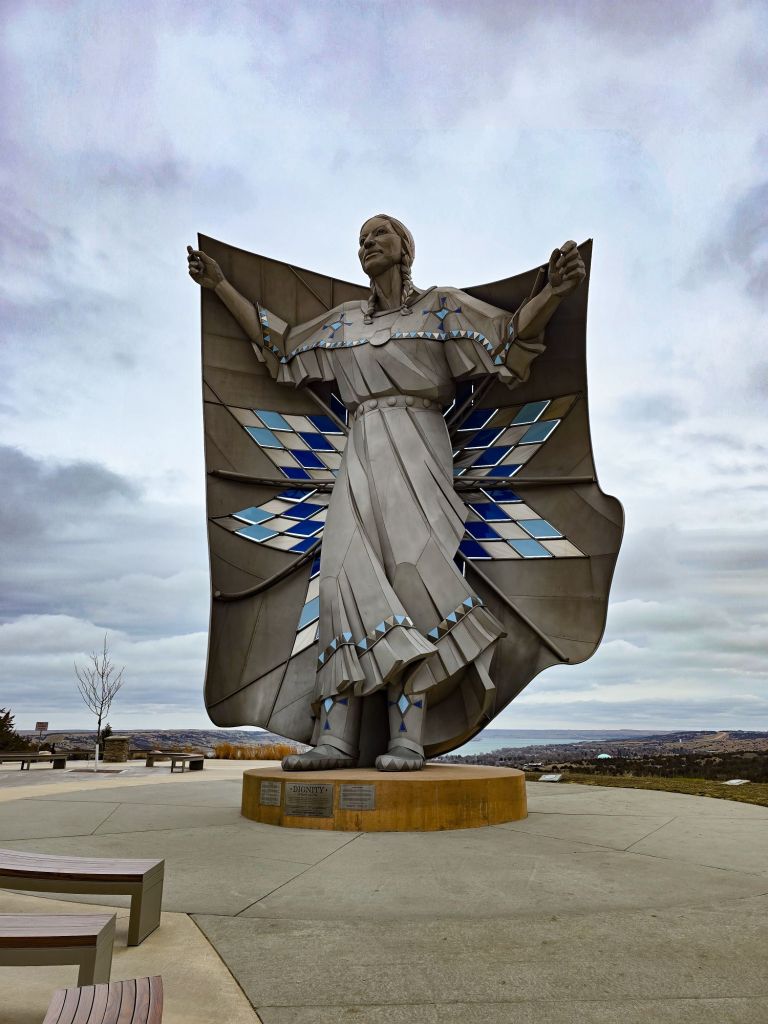
Lady Dignity.

She doesn’t just stand—she holds space. Arms outstretched, star quilt open like a sky you can almost step into. She stands with her back to the Missouri River, facing east—toward the prairie, toward the long stretch of land I come from.

There’s something about that I can’t shake.

It feels intentional. Like she isn’t watching what has passed, but what is still becoming. Like she’s holding space for what lies ahead instead of what’s already behind.

And every time I stop there, coming from the east, it feels like she’s meeting me. Not turning away—but standing firm, steady, facing the same horizon I’ve known my whole life.

Prairie to prairie. Quiet to quiet.

Like she understands where I’ve been before I even arrive.

I always stop here. I don’t rush it. I don’t treat it like just another roadside landmark. It feels wrong to do that.
There’s something about her that asks for stillness.

Maybe it’s the way the wind moves through this place—real South Dakota wind, the kind that doesn’t ask permission. It catches the edges of her quilt, the blues shifting like pieces of sky caught in motion. In the daylight, those diamond shapes flicker and glow, like quiet reminders that even something solid can carry light.

And at night, she changes.

She doesn’t disappear into the dark—she rises in it. Lit up, steady, unwavering. Not softer, not smaller. Just… present in a different way. Like strength doesn’t always have to be loud to be seen.

Dale Lamphere said she represents the courage, perseverance, and wisdom of the Lakota and Dakota people—and you can feel that when you stand there. Not in a loud, overwhelming way. But in something deeper. Something rooted. Something that doesn’t need to prove itself to be known.

It makes you straighten a little. Look a little longer. Think a little quieter.

For me, she’s become a marker. Not just of geography—east and west, prairie and hills—but of something internal too. A pause between where I’ve been and where I’m going. A reminder that there’s strength in standing still for a moment. In acknowledging the ground beneath you and the history it holds.

Every time I stop, it feels the same and different all at once.

Familiar, like coming back to something that knows you.
And humbling, like you’re being gently reminded how small you are in the presence of something that carries so much more.

I don’t stay forever.

Just long enough to look up at her, to let the wind move around me, to feel that quiet settle in my chest.

And then I keep driving—west into the hills, or back east into the open.

But I carry her with me every time.

Because some places don’t just exist on a map.
Some places meet you where you are—and leave something behind when you go.

And she does.

She always does.

The Things That Followed Me Home

I’ve been building something quietly.

Not because I didn’t want to share it—but because I didn’t know how to talk about it without unraveling it too soon. Some things feel fragile when they’re still becoming. Like if you name them too quickly, they might lose the shape they were trying to take.

But I don’t want to keep it hidden anymore.

I’m creating something out of my photography and my writing. Not just a collection, not just something to look at—but something that holds what those moments felt like when I was inside them. Something that doesn’t let them disappear as easily as everything else seems to.

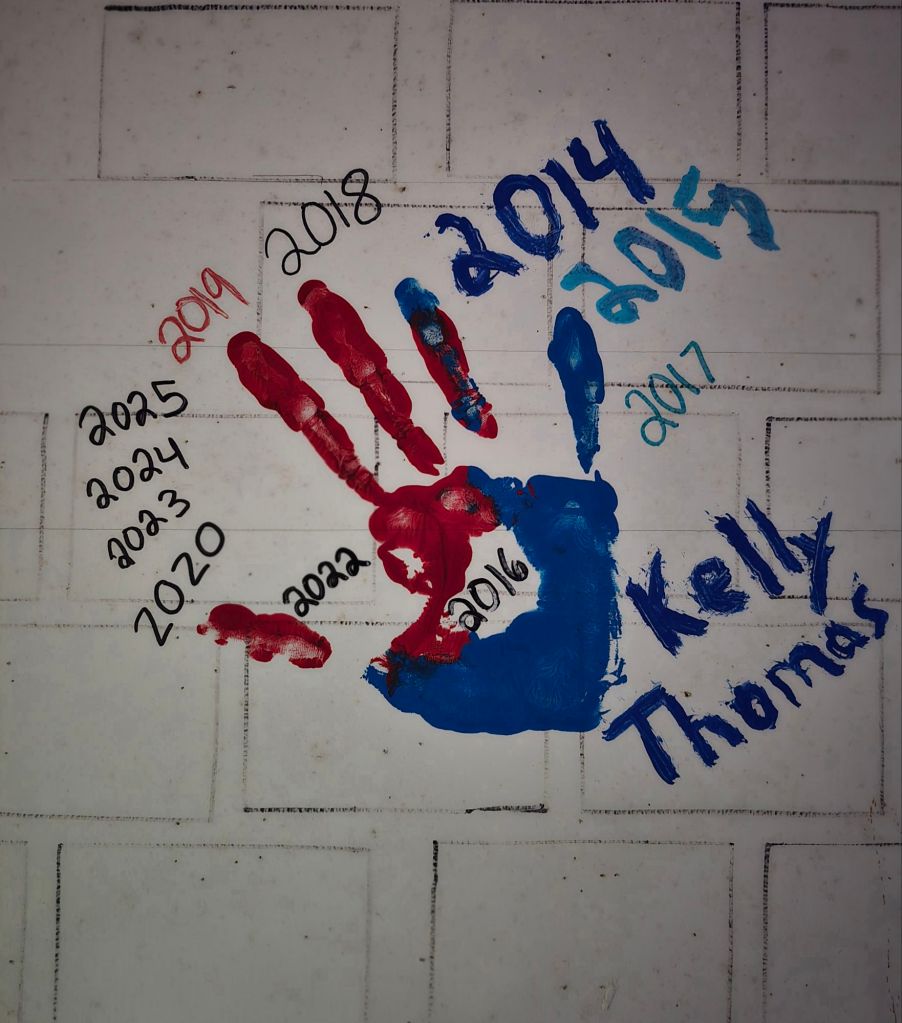
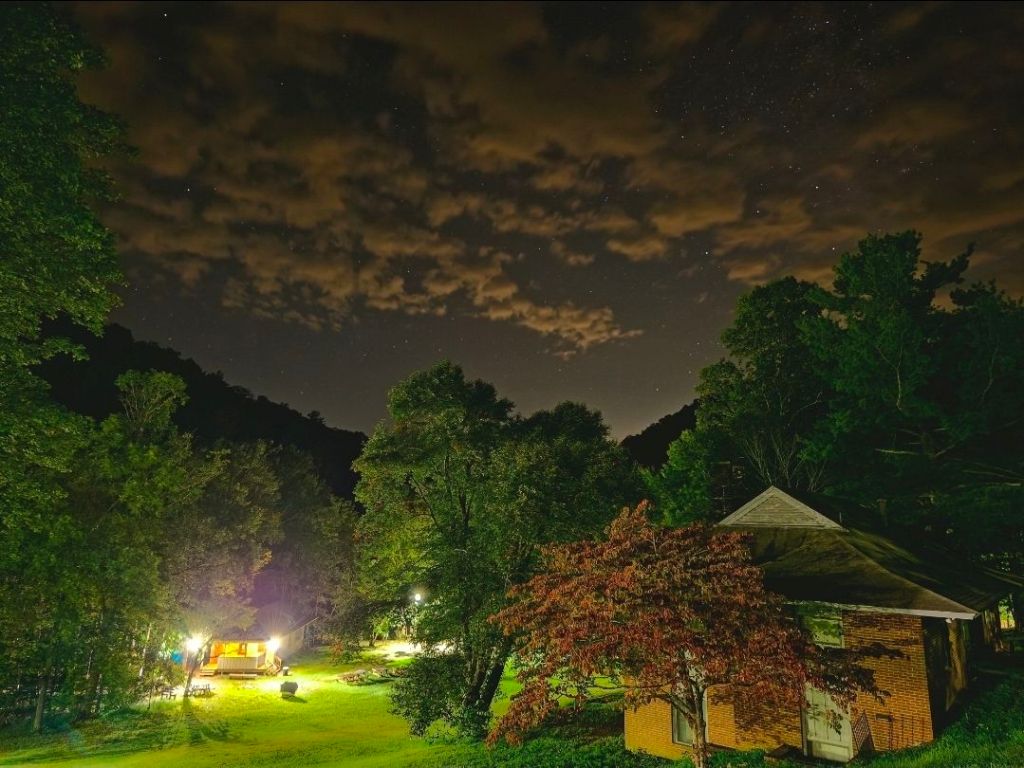
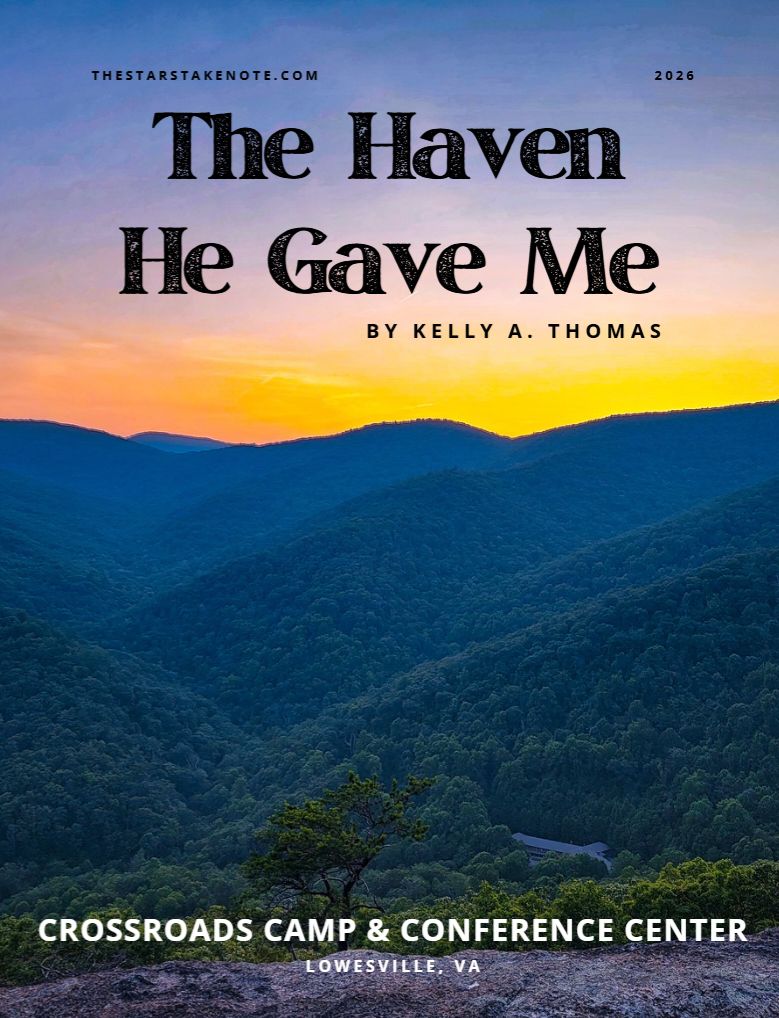
One of these pieces is rooted in 11 summers at a camp that shaped me in ways I’m still trying to understand. It wasn’t just the place—it was the people, the conversations, the nights that stretched longer than they should have, the quiet moments in between everything loud. It was being known, and sometimes being unknown in ways that still mattered. It was learning how deeply something temporary can change you.

I didn’t realize, while I was there, that I was becoming someone different each summer. I didn’t realize I was collecting pieces of myself that I would spend years trying to sort through later.

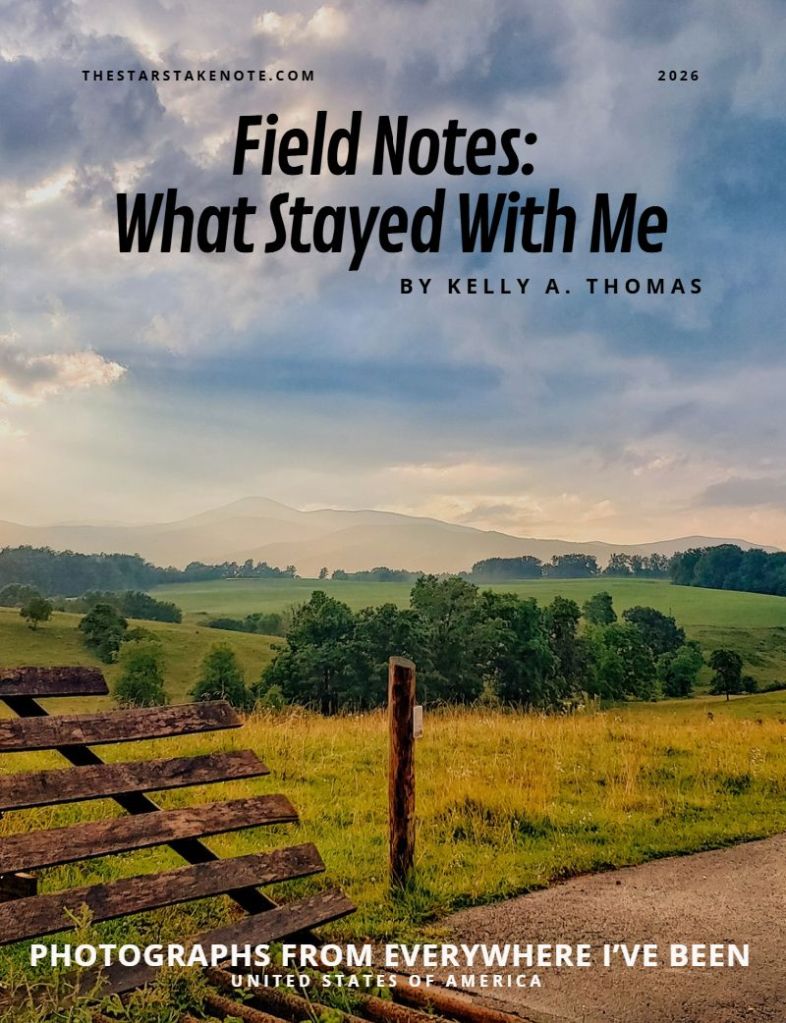
The other piece is everything else.

Everywhere I’ve been.
Every road, every shoreline, every stretch of sky that made me stop for a second longer than I meant to.

From the East Coast to Alaska.
From mountains that made me feel small in a way that steadied me, to quiet edges of water where everything felt like it could finally exhale.

It’s the fox that appeared for a moment and then was gone.
The birds that stayed just long enough for me to notice them.
The kind of light that feels like it’s trying to say something, even if I don’t fully understand it yet.

I think I’ve been trying to hold onto things because I’m afraid of how easily they pass.

People.
Places.
Versions of myself.

There are photos I took because something felt beautiful.
There are others I took because I didn’t want to forget.
And there are some I didn’t understand at all until much later—until I looked back and realized they were carrying more than I knew at the time.

This is a slow process.

Some days I open it and everything feels clear, like I know exactly what I’m trying to say.
Other days I close it because it feels too heavy, or too unfinished, or too honest in a way I’m not ready to sit with yet.

But I don’t want to wait until it’s perfect to let it be seen.

I want to share it while it’s still becoming.
While it’s still messy.
While I’m still figuring it out.

Because that feels more true to what this actually is.

This isn’t just something I’m making.
It’s something I’m moving through.

It’s me trying to understand what stayed with me—and why.
Why certain places still feel like they’re calling me back.
Why certain people still exist in the quiet parts of my thoughts.
Why some moments refuse to fade, no matter how much time passes.

I don’t have a clean explanation for any of it.

But I do have these images.
These words.
These pieces of something I lived.

And for now, that feels like enough to begin.

As Long as There’s Still a Mailbox

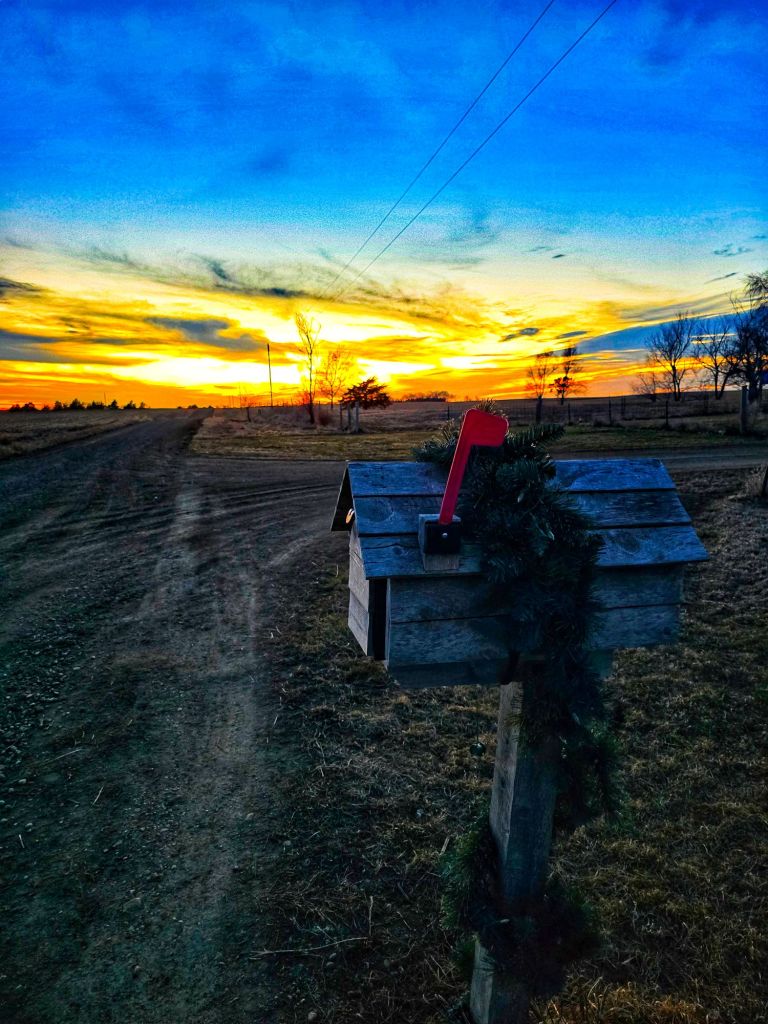
There was a rumor going around recently that the mail might stop someday.
Not tomorrow, not next week, but the kind of quiet talk people say like it’s inevitable — everything going digital, everything getting faster, everything needing less paper, less waiting, less space to hold things. Most people hear that and think about bills, junk mail, catalogs they never asked for.

I heard it, and all I could think was,
one day there might be a last letter.

Not the kind where you know it’s the last.
Not something marked with an ending.
Just the kind you send without realizing that someday there won’t be another envelope after it.

Letters have never been just letters to me.
They’re pieces of time you can hold in your hands.
Proof that someone stopped long enough to feel something, long enough to write it down, long enough to believe it was worth the effort to send. Ink takes longer than typing. Stamps take longer than hitting send. Waiting takes longer than refreshing a screen. And maybe that’s why it matters so much — because nothing about it is instant, so nothing about it feels careless.

For the last few years, sending mail has been one of the steadiest things in my life.
Not because life was steady, but because the letters were.
No matter how much changed, I could still sit down, pick a card, find a pen that worked, and write to someone who mattered.

And it was never just a letter.

It was photos from a random day that felt too important to keep to myself.
Polaroids with the colors a little off but the memory still right.
Receipts, pressed flowers, scraps of paper with things I meant to say but didn’t know how to fit into a sentence.
Little notes written at midnight.
Stickers I found and immediately knew who they belonged to.
Tiny pieces of my life folded in half, then folded again, then tucked carefully into an envelope like I was trying to make the distance smaller by filling the space with proof that I was thinking of them.

There’s something about sealing an envelope that feels different than ending a conversation.
Once it’s closed, you can’t change the words.
You can’t unsend it.
You just have to trust that what you wrote was honest enough, real enough, that when it gets opened on the other end it will still mean what you meant when you wrote it.

So when people talk about the mail changing, slowing down, disappearing someday…
it doesn’t sound like a small thing to me.

It sounds like someone telling me there might be a day where I can’t do this anymore.
A day where there isn’t a stamp to press into the corner.
A day where there isn’t a mailbox waiting at the end of the driveway.
A day where I can’t slide a photograph into a card or tuck a little keepsake between the pages and send it across the miles like a quiet reminder that someone, somewhere, is still thinking about you.

And the truth is, the sadness isn’t really about the postal service.

It’s about what the letters mean.

They mean there was someone worth writing to.
They mean there was distance, but not so much distance that it couldn’t be crossed.
They mean there was a season of my life where love — or friendship, or whatever name you give to the people who feel like home — looked like ink stains on my fingers and envelopes stacked on my desk waiting for stamps.

They mean there was a time where I could hold something in my hands and know it was on its way to someone who mattered.

Maybe the mail isn’t going anywhere anytime soon.
Realistically, it probably isn’t.
But the thought that it could someday makes me realize how much of my life is tied up in something as simple as paper and ink and the belief that if you send something out into the world with enough care, it will find where it’s supposed to go.

One day there will be a last letter.
Not because the world ends.
Not because the feeling ends.
Just because life moves the way it always does, and seasons close without asking if you’re ready.

One day there will be an envelope I don’t send.
A photo I keep instead of folding in half.
A note I write and never seal.
A memory that stays in my hands instead of traveling across the miles.

And maybe that’s why I keep sending them now.
Why I keep adding one more stamp, one more picture, one more little piece of a life I don’t want to forget.
Why I keep tucking pieces of my days into envelopes like I’m afraid that if I don’t send them somewhere, they won’t feel real.

Because as long as there’s still a mailbox,
as long as there are still stamps,
as long as there’s still an address I know by heart,

I want there to be proof
that distance didn’t stop me,
that time didn’t stop me,
that life didn’t make me too busy to care.

I want there to be proof that I tried to reach them.

Color in the Middle of Winter

Winter has a way of quieting everything.

The fields fall asleep beneath frost. The trees stand bare against pale skies. Even the light seems to leave earlier each evening, slipping below the horizon before you are ready for the day to end. There are months where the world feels muted, like the color has drained from it.

And then flowers arrive.

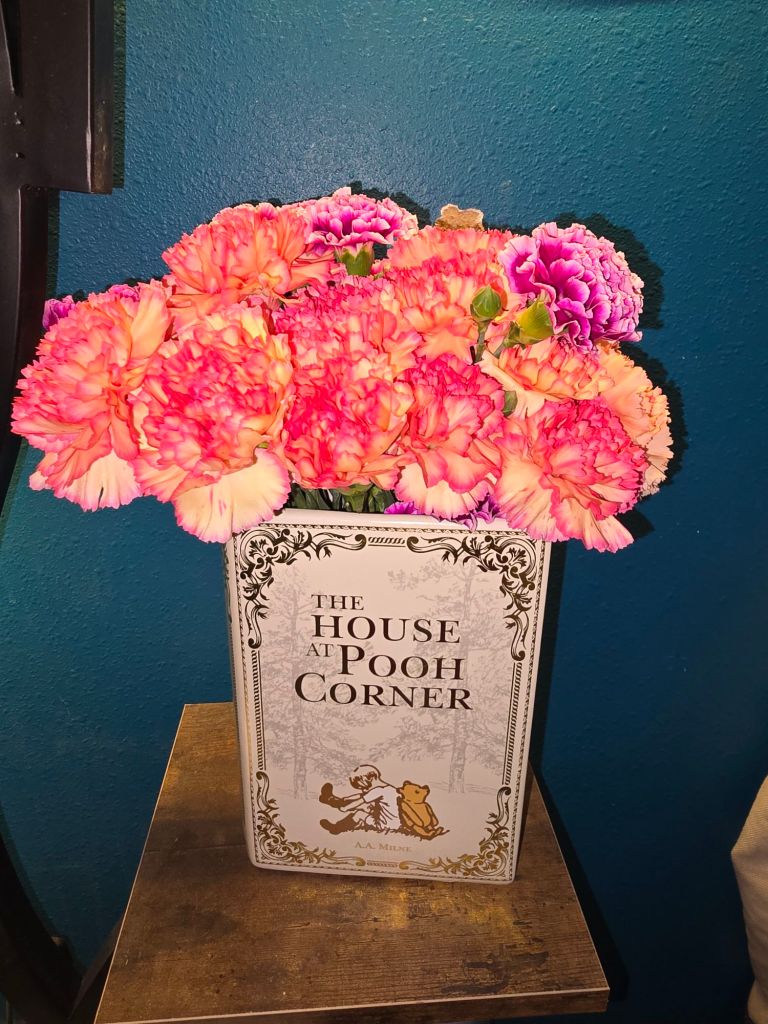
Suddenly there is color sitting in the middle of the room. Petals the color of warm sunsets and summer evenings. Edges painted in coral and gold, like small fires burning gently against winter’s gray. They feel almost defiant there on the shelf, bright and alive in a season that often forgets what color looks like. They do not belong to the cold outside the window, and maybe that is exactly why they matter so much.

I have always loved getting flowers. Not for the gesture alone, but for what they carry with them. Flowers are small reminders that beauty still exists somewhere beyond the cold months. That life is still unfolding quietly, even when the earth around us seems still.

But if I’m being honest, most of the time I’m the one who buys them.

There is something quietly comforting about choosing them for yourself. Walking past a small display of blooms and deciding that today could use a little color. That the room could use something alive in it. That maybe you deserve something soft and beautiful sitting nearby.

It is a small act, but it feels like care.

Not the loud kind people celebrate, but the quiet kind that says, I am still here. I am still choosing small joy where I can find it.

They change a space in a way that is hard to explain. A shelf becomes brighter. A room feels softer. Something inside you lifts just a little without asking permission.

And still, I love that flowers can travel between people. How easy it is to send them. A bouquet arriving at someone’s door can interrupt a difficult week, soften loneliness, or simply remind them that they crossed someone’s mind that day.

Small gestures have a way of lingering.

I think my love for simple things like this traces back to childhood.

I was raised on Winnie the Pooh. Stories where nothing dramatic had to happen for a moment to matter. A walk through the Hundred Acre Wood. Sitting beneath a tree with a friend. Honey shared between quiet conversations.

Those stories taught something simple but lasting: the smallest things are often the most important.

There is a line from Winnie the Pooh that has always stayed with me:

“Sometimes the smallest things take up the most room in your heart.”
– Winnie the Pooh –

Flowers feel like that.

They are simple. Temporary. Quiet.

But they carry warmth with them. A reminder of kindness. Of friendship. Of choosing beauty even on ordinary days.

And sometimes, in the middle of winter, the small fires of color sitting on a shelf are not from someone else at all.

Sometimes they are simply you, reminding yourself that the world has not forgotten how to bloom.

A Wrist Full of Memories

Friendship bracelets are small. Tiny threads knotted together. Yet they hold something enormous. Each one is a quiet act of devotion, hours spent twisting color into pattern, time given freely, care folded into every loop. They are gifts, yes—but also promises: that someone is thinking of you, that someone is holding you in their mind and heart while the world keeps moving.

At camp, bracelets crowd wrists like little galaxies. Staff and counselors wear them stacked, layered, every knot a story, every color a memory, every frayed end a summer lived fully. I have always loved that—seeing wrists full of stories, realizing how every friendship leaves a mark, small but permanent. And I have always felt naked without them. Bare wrists feel empty, like space without stars, like a body missing its constellation.

Every New Year, I cut mine off. They fray, fade, and become ragged—like old memories that ache to be remembered but can’t be worn any longer. I save them, of course, tucked into boxes, jars, envelopes, working slowly on a way to frame them so they are not lost. And then I start again: fresh threads, fresh intentions, new stories woven into the colors of my life. It is a ritual, a rhythm. A way of telling myself that no matter what has passed, there is always a way to begin again.

This year, everything feels different. I won’t be at camp. I won’t see the wrists stacked high with tiny galaxies. I worried I would have to get used to bare arms, to empty mornings and quiet wrists, to the loss of the small, steady comfort of bracelets wrapping around me like old friends. I feared the hollow space where devotion used to live.

And then my best friend sent me two.

Two bracelets, carrying her across the miles. Two tiny, twisted threads that are more than thread—they are proof that love travels. That care is patient and persistent. That even when seasons end, even when places close, even when the rituals of your life change, some bonds do not fade. I put them on my wrist, and suddenly my world feels stitched together again. The threads hum with memory, with laughter, with late-night confessions, with sunburned afternoons, with quiet mornings, with all the moments that have ever mattered.

Friendship bracelets are small. But small things can hold infinite weight. They carry our devotion, our longing, our constellations of memory and care. They remind us that even when life moves on, even when summers end, even when we are no longer who we were, love can still wrap itself around us, knot by knot, thread by thread.

And somehow, in that simple act of giving and receiving, I am whole again.

What We Carry


Some people see five gallon buckets and think of chores they’d rather avoid.

They’re paint-splattered in the corner of a garage. Caked with drywall mud. Left behind after a job is finished and everyone’s already moved on. Cheap plastic. Replaceable. Something you grab when you need it and forget when you don’t.

On a farm, they become something else.

Five gallon buckets are essential to farming in a way that’s hard to explain until you live inside the rhythm of it. They’re there before the sun fully clears the horizon and still there when the light finally gives up. We use them to haul water to livestock tanks when hoses freeze solid or won’t reach far enough. We use the gator to carry feed from the barn to a small standalone trailer, buckets lifted and set down again, lined up inside where they’ll sit overnight, safe and dry, waiting. The next day, those same buckets are picked up again and carried into animal pens, one slow trip at a time, until everyone is fed.

Sometimes they hold tools. Sometimes they hold salt or minerals or whatever you needed to grab without thinking. Sometimes they’re empty, which somehow still feels like a promise, like they’re waiting for the next thing that needs doing.

They wear the work. Scratches from fences and trailer edges. Dents you don’t remember making. Plastic dulled by sun and weather. The handles squeak. One always seems to leak just enough to soak your boots, and you don’t remember which one it is until it’s already dripping. Dirt clings to the sides. Mud cakes the bottoms.

We have an array of them. Blues and whites and reds. Loud pinks that don’t belong anywhere else on the farm. Buckets with hardware store logos. Buckets from places we passed through once and didn’t think we’d remember. There’s a quiet joy in finding new colors and new designs, in something so practical still managing to feel personal. Like each one has a small story pressed into its sides.

They don’t get cleaned as often as they should. They don’t get put away neatly. They lean against barn doors, ride in the back of the gator, wait by gates and pens. And somehow, they’re always close when something breaks or spills or needs to be carried right now.

Farming is full of things like that. Tools that don’t look like much. Work that doesn’t photograph well. A life built from small, physical acts, repeated until your body remembers them even when your mind is tired.

Five gallon buckets aren’t romantic. They don’t make good stories on their own. But they live in the spaces between tasks. In the weight of water carried by hand. In the hollow sound of feed hitting the bottom. In the pause when you set one down, wipe your hands on your jeans, and look out across the pens before lifting it again.

Out here, they’re part of how the work moves forward. Part of how days are held together. Quiet witnesses to the fact that someone was here, doing what needed to be done, and will be back tomorrow to do it again.

The Brutal Beauty of Winter

We’ve reached that part of winter where South Dakota stops pretending.

The forecast has settled into a long stretch of below zero temperatures, the kind of cold that doesn’t care how tough you think you are or how many layers you pile on. This cold is brutal. It cuts straight through coats and sweaters like they’re suggestions, not protection. The wind doesn’t knock. It slams into you, steals your breath, and leaves you staggering for half a second while it whips loose snow into tiny glass missiles that sting your face and hands.

Any exposed skin burns instantly. Not metaphorically. Actually burns. Raw and angry and aching within seconds.

The cold doesn’t stay outside either. It seeps through the windows, through the walls, through the cracks you didn’t know existed. It settles into every room like an unwelcome guest, making the idea of leaving a warm bed feel almost offensive. Even inside, there’s always a chill riding the air, a reminder that winter is very much in control.

This is the kind of cold that makes your whole body ache. Your nose runs, and before you can even wipe it, it freezes, an uncomfortable, ridiculous reality of arctic temperatures. If your gloves get wet, they stiffen and harden, crusted with frost, no longer flexible or warm, just cold armor against colder air. Everything feels sharper. Heavier. More exhausting.

And yet, somehow, this depth of cold brings beauty with it.

Winter sunsets feel more vivid, like the sky is making up for everything it’s taken away. Colors burn brighter and linger longer, purples bleeding into pinks and oranges in ways that feel almost unreal against the frozen landscape. The air is clearer, crisper, and the light carries farther.

Frost clings to trees and fences, delicate and quiet, turning ordinary branches into something almost sacred. Every twig is outlined in white, every field dusted and still. The world feels paused, held in place by ice and breath and silence.

On days like these, the sky sometimes gifts us sun dogs. They’re bright spots of light that appear on either side of the sun, caused by sunlight refracting through ice crystals suspended in the atmosphere. Basically, the cold is so intense that the air itself sparkles. Halos form. Light bends. The sky shows off.

I saw them on Saturday, soft and glowing, but the sky was thick with clouds and I couldn’t get a good photo. Still, just seeing them felt like a quiet reward for enduring this kind of cold. Like winter saying, I know this hurts, but look what I can do.

I hate this level of cold. I really do. I hate how it makes everything harder and slower and more painful, how it drains energy before the day even starts. But I love what winter creates. I love that even in the most unforgiving conditions, there’s still beauty pressing through, still light bending and colors burning and frost turning the world gentle.

Maybe that’s why it sticks with me.

Because winter doesn’t soften. It doesn’t apologize. But every once in a while, it lifts the veil just enough to remind us that even here, especially here, there is something worth noticing.

And I hope I see it again soon.

Color At The Edge Of A Barren World

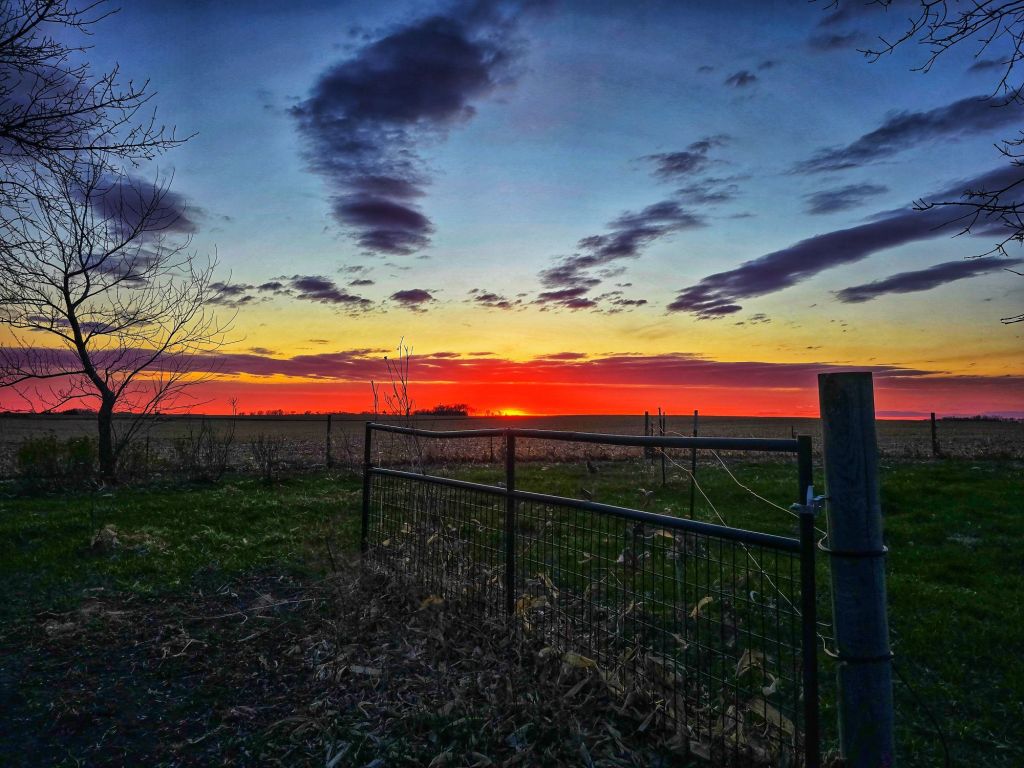
Tonight’s sunset wasn’t the boldest I have ever seen.
It didn’t streak across the sky in wild ribbons of fire or paint the clouds in colors that demand you stop everything just to feel alive. But after a week swallowed by grey, a week of barren fields and frozen winds and a world that looked like it had forgotten how to breathe, this small burst of color felt like a hand reaching out of the cold.

The kind of cold we had today doesn’t lend itself to beauty.
It bites through coats and gloves and makes your eyes water the second you step outside. It turns every inhale into a sting and makes even short walks feel like a punishment. The days have been long and heavy, the kind where the sky barely changes and everything feels muted or asleep.

That kind of winter wears on you.
It settles into the quiet places.
It makes you wonder if the sun remembers how to rise for you at all.

So when it finally pushed through tonight, just a thin line of orange pressed against the horizon, just enough pink and gold to soften the clouds, I felt something loosen inside me. Not joy. Not relief. More like a reminder. A small, almost trembling insistence that even the bleakest stretches eventually break.

There is something tender about sunsets like this.
The quiet ones.
The ones that don’t announce themselves.
The ones that look like they are offering whatever little light they have left, hoping it will be enough.

It hit me harder than I expected.
Maybe because everything has felt so dim lately.
Maybe because I am tired in the way winter makes you tired, tired in the way that comes from carrying invisible things for too long.
Maybe because every day has felt like it blends into the next, all of them silver and silent and cold.

But tonight, the sky remembered color.

It was not spectacular.
It was not loud.
But it was present.

And presence alone can feel like a miracle after so many days of nothing but grey. After so many hours of wind that cuts through you and fields that look lifeless and mornings that never fully brighten.

I stayed longer than I needed to, watching the last thin glow disappear behind the line of trees. The air stung my face. The cold settled deeper. But it felt worth it.

Because even if tomorrow returns to grey, even if the frozen world closes in again, at least I had this one moment. This one quiet offering of beauty. This one reminder that winter does not get the final word.

For a brief moment, color pushed through the cold.
For a brief moment, the world softened.
For a brief moment, I remembered that I am still here too.

The Night The Sky Couldn’t Hold Itself

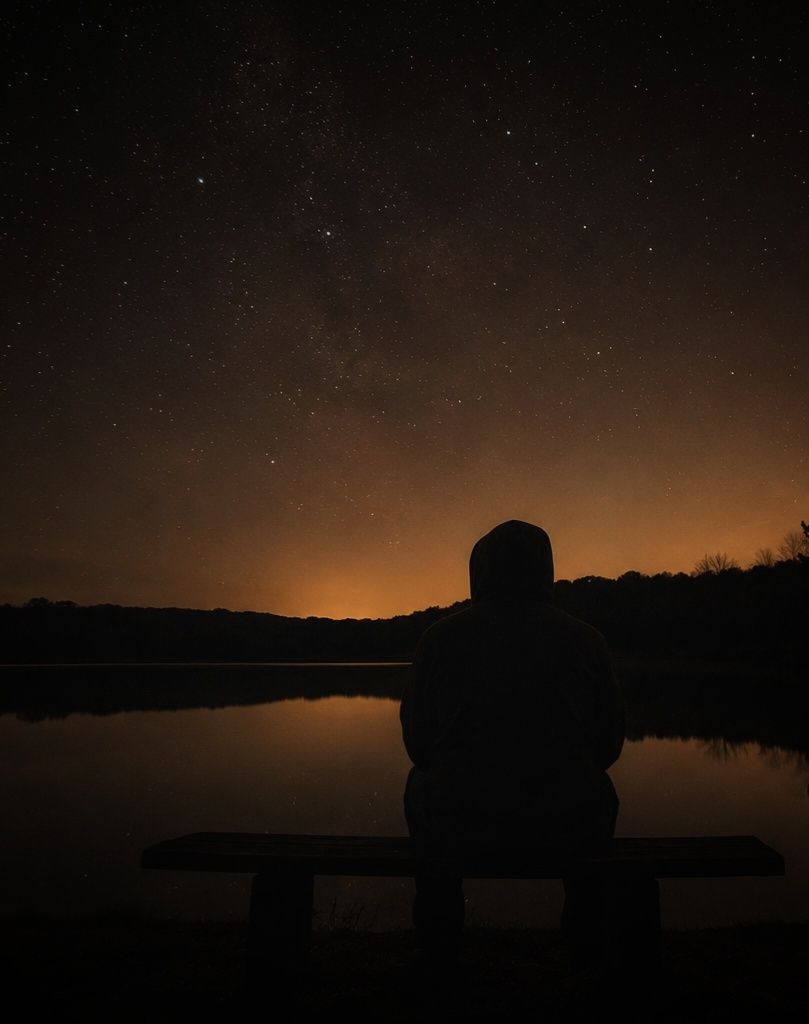
They form when a camera stays still long enough to notice what we usually rush past. It holds its breath, holds its place, and lets the Earth turn beneath it. We’re the ones moving, but the long exposure makes it look like the stars are the ones wandering, sweeping their light across the night like they have somewhere gentle to be.

I think that’s why I love them.
Because they prove something I keep forgetting.
That movement doesn’t always look like progress.
Sometimes it looks like staying in one place long enough for the truth to catch up to you.

What I can’t stop staring at is the reflection in the water.

That doubled sky.
That echo of light.
Like the world was so full that it overflowed and spilled itself into the stillness until even the dark had to carry something bright.

There is something almost painfully tender about that.
How the sky didn’t shrink itself or dim itself or apologize for being too much.
It simply became two skies instead of one.

And maybe that is what hit me.
The reminder that even in silence, even when my days feel stuck or small or swallowed by their own shadows, things are shifting.
Healing is shifting.
Grief is shifting.
I am shifting.
Not loudly. Not obviously. But undeniably.

The water didn’t move, but it mirrored the stars anyway.
And some days I feel like that.
Quiet, unmoving, like nothing is changing at all.
But maybe I am reflecting things I can’t see yet.
Maybe the parts of me that feel still are actually catching light I didn’t know was reaching for me.

I stayed out by the water longer than I meant to.
The grass was cold.
The night smelled like winter trying to arrive too early.
And I felt that familiar ache in my chest, the kind that comes from wanting more than I can name, from missing things I can’t explain, from holding hope and exhaustion in the same trembling hand.

But the stars kept tracing their slow arcs across the sky.
They didn’t hurry.
They didn’t need to.
They simply kept going, one thin line at a time, drawing proof of their persistence in the dark.

I think I needed to see that.

Because lately I have been feeling like I am barely moving.
Like I am suspended between worlds, South Dakota and Virginia, past and future, memory and whatever comes next.
But the camera caught movement my eyes couldn’t.
And maybe that is true for my life too.

Maybe I am changing in ways I won’t recognize until later.
Maybe this season is a long exposure.
Slow, quiet, honest.
Capturing shifts I won’t understand until I step back and see the trails.

Maybe you are in one of those seasons too.

If you are, I hope you remember this.
Stillness is not stagnation.
Quiet is not failure.
And even on the nights when you feel like you are holding your breath, the sky is still moving, and so are you.

A Sky That Breathed

The northern lights came last night.

Not the way I always imagined. Not wild or brilliant or loud. Not the kind they write postcards about or chase across Icelandic skies. These came soft. Unannounced. Almost hesitant. Like maybe the sky forgot it was allowed to be beautiful here too.

It started with a haze—green stitched across the clouds like breath. A red glow spilling out near the edges. Faint. Fainter than the photos. But I could see them.

With my own eyes.
Not through glass or lens or screen.
Just me. And the sky. And the dark.
And a kind of light I didn’t know I needed.

I’ve wanted to see the northern lights for as long as I can remember. It’s been one of those “someday” things, tucked onto a dream list I rarely say out loud. I always pictured them bold—exploding across a frozen sky in a place far from here. I always thought I’d have to go chasing them. Far. Cold. Alone.

But they came here.
To this farm.
To this quiet stretch of November.
To this version of me I’m still learning how to carry.

And maybe they weren’t loud. Maybe they weren’t the grand, breathtaking show I always pictured.
But still—they came.
And I saw them.

And it moved something in me.

Because we’re six weeks from a new year.
And I don’t know how I feel about that yet.

There’s been so much ache this year. So many days where the silence got too loud. So many moments where I felt like I was watching the world move and burn and spin without me. I’ve been holding a lot. Letting go of more. Some things I’m still not ready to name.

But last night, just for a moment,
the sky reminded me that not everything is lost.

That even faint light still counts.
That beauty doesn’t have to be loud to be real.
That wonder can still find me, even here, even now.

I still want to see the Iceland lights someday.
The big ones. The unforgettable ones.
But maybe I needed this kind first.

The quiet kind.
The kind that shows up when you stop expecting it.
The kind that doesn’t fill the whole sky, but still fills you.

And maybe, just maybe, that’s enough for right now.