Holy Ground

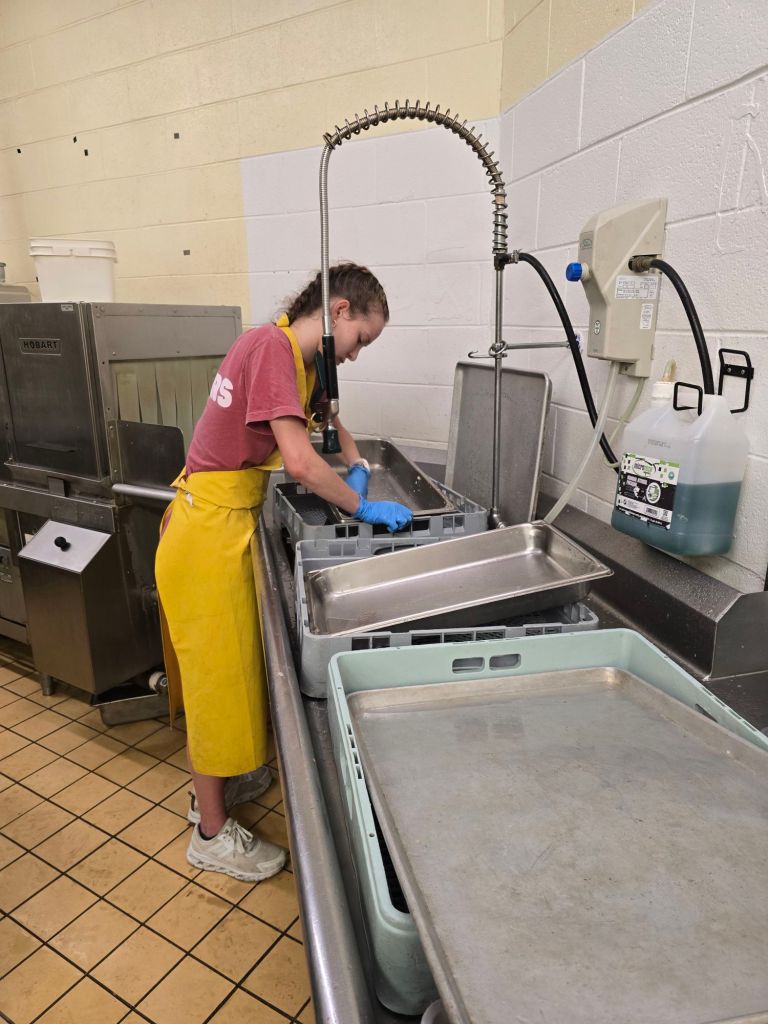
I served eleven years on Crossroads staff. Eleven years of early mornings, late nights, storms weathered, and prayers whispered between tasks. Eleven years of carrying water jugs, fixing leaks, sweeping cabins, and learning that sometimes ministry doesn’t look like preaching. It looks like quiet work. It looks like showing up. It looks like love disguised as labor.

Yesterday was the 40th anniversary of Crossroads. Forty years of ministry, summer camp, and community. Forty years of stories written on this soil. It was also my last day of work.

This morning I stood on the porch one last time. The air was thick and cool, clouds gathering and parting like the sky couldn’t decide what it wanted to feel. I drove up to Hunt, filled my bottles for the last time, and cried because how do you not, when you’re saying goodbye to something that has shaped you down to your bones.

The leaves were turning, the wind carrying them down the mountain like tiny farewells. It felt right that I was leaving with them, part of the same rhythm of endings, of change, of release. The mountain will go on breathing without me. That truth stings, but it’s holy too.

This mountain has held so many versions of me.
The girl who wanted to belong.
The young adult who learned to lead.
The broken one who found healing in the work.
The quiet one who met God not in sermons, but in silence.

I’ve said goodbye to people, to summers, to versions of myself. But this goodbye feels different. Final, in a soft and sacred way. Like setting something down without resentment, only gratitude.

At our final staff meeting, Kenneth asked, “How do you create space to cultivate God?”

The question has stayed with me. For me, it’s about learning to notice. Not just carving out time, but softening my heart enough to see Him in the small things. In a shared meal. A kind word. A quiet walk back from dinner. It’s not loud or dramatic. Sometimes it’s just sitting with my coffee and not reaching for my phone. Letting silence stretch longer than feels comfortable. Being honest in prayer, even when all I can manage is a sigh.

And then there’s little lion, Kenneth’s two-year-old son, running across the property with that wild curiosity only toddlers have. Watching him see the world like it’s brand new has been one of the most grounding parts of this season. He’ll stop and study a leaf, or point to the sky just to say “moon.” He laughs at gravel crunching under his shoes, at the wind in his hair, at the smallest moments of wonder. He notices everything. He reminds me that awe isn’t something you grow out of. It’s something you grow back into.

Maybe that’s what this whole chapter has been about. Learning to notice. To see God not only in the big moments, but in the ordinary ones too. In the work. In the laughter. In the stillness.

As I stood there today, looking out over the valley, I thought about how much of my life is woven into this soil. How many prayers I’ve whispered here. How much love this place has carried for me and through me. Crossroads will always be my holy ground.

And as I go, I know I’m not really leaving.
The dust of this mountain is still on my shoes.
Its river still runs through my prayers.
And its stars,
its stars will always take note.
The Storm That Washed the Mountain

Summer ended in silence.
Not the peaceful kind.
The kind that creeps in like fog across the hills—soft, slow, and heavy.
The kind that makes everything look the same,
but feel different.

There was no final campfire.
No porch full of laughter.
No loud goodbyes or last-night chaos.

Just a storm.

The kind that settles over the mountain like a sigh.
Not loud. Not violent.
Just steady. Aching.
Like the sky itself was grieving.

And maybe it was.
Maybe it was mourning the end of what we carried all season.
Maybe it was finally letting go of the weight we never said out loud.

Because that storm—
It didn’t just fall.
It washed.
It bled through the cracks we’d patched too quickly.
It soaked through the spaces we never had time to feel.
And it left everything raw.

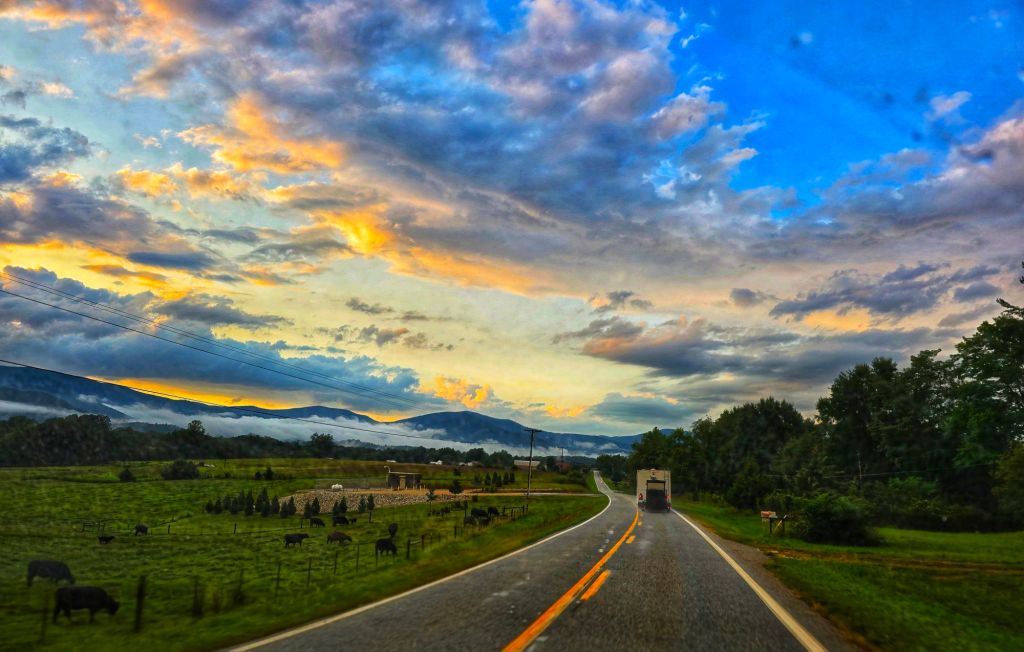
The road glistened.
The fields were quiet.
The mountain felt hollow.

Like it had been wrung out.

And maybe we had been, too.

Because this summer—
It cost us.

It cost late nights and early mornings.
It cost cracked hands and tired knees.
It cost pretending we were fine when we weren’t.
It cost silence from people we trusted to see us.
It cost the versions of ourselves we had to become just to survive.

And when it was over,
when the last walkie call faded and the last goodbye didn’t come,
there was only the storm.

Only the rain carving lines down the windows like tears we never had time to cry.
Only the sky, bruised with light, like it, too, had been holding everything in.

But after the storm, the mountain looked different.

Cleaner.
Emptier.
More honest.

Like it had stopped pretending.

And maybe that’s what endings really are—
not neat, not pretty.
But necessary.
A reckoning.
A chance to exhale everything we held too long.

It still hurts.
The shift.
The quiet.
The ache of not hearing your name over the radio.
The porch light that stays off.
The room that no longer smells like sweat and bug spray and sleep deprivation.

But healing doesn’t always come gently.
Sometimes it comes like a storm.
Sometimes it strips everything bare.
Sometimes it doesn’t ask permission.
It just breaks you open,
so something softer can grow.

And when it passes,
you’re not the same.

The mountain isn’t either.

But maybe,
maybe that’s the point.

The Mountain Holds Their Story

We’re lucky enough to host two Kesem chapters here at Crossroads—University of Virginia and William & Mary. Last week, UVA brought their crew up the mountain. This week, it’s William & Mary’s turn. And while both groups carry the same mission, the same heart, each week unfolds differently. It’s the same story told in two different voices—and both are beautiful in their own way.

UVA’s week is loud and full of motion. It hums with energy, like the whole place is alive from sunup to lights out. They bring big games, big laughs, big love. You can feel their presence in every inch of camp—in the giant swing squeals, the chaos of the dining hall, the trail of glitter and joy they leave behind. It’s like sunlight—bright, wild, and impossible to ignore.

William & Mary’s week moves differently. It’s softer, steadier, more intentional. They bring warmth that creeps in slowly, like morning fog over the hills. It’s in the way they notice campers, really see them. The way they create space for conversation and quiet moments, while still bringing fun and laughter. Their energy doesn’t blaze—it glows. And it’s no less powerful.

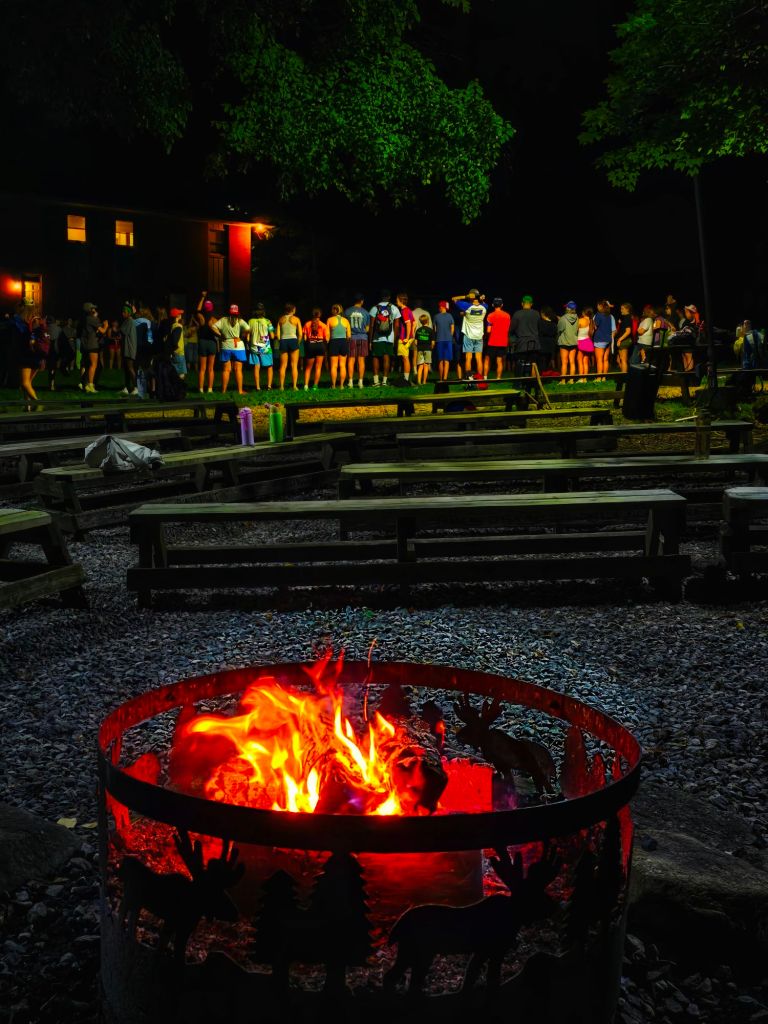
But no matter who’s here, the thing that never changes is the transformation. We see kids show up guarded, unsure, holding their stories close to their chest. And by midweek, we see them splashing in the pool, laughing with their whole body, or sitting around the campfire in a circle of new friends, lit up by flame and safety. They start to feel like they belong. Like maybe they’re not so alone in this world after all.

And for us, as the host site—we get to witness that. We get to see college students give everything they’ve got for a week straight. We watch them pour themselves out in the smallest, most meaningful ways—braiding hair before breakfast, sitting with a homesick camper in the dark, yelling encouragement from the bottom of the zipline, laughing when they’re exhausted, making every single kid feel like they matter.

These two weeks always remind me why camp matters. They remind me what love looks like in real time.

It looks like water balloons and dance parties. Like whispered “you’ve got this” pep talks and messy friendship bracelets. Like catching a camper’s smile for the first time all week and knowing you helped make it happen.

At Crossroads, our mission is to create space to experience God. And in these weeks, we do. Not always in the traditional ways, but in the joy echoing off the hills, in the trust built over meals, in the way someone feels held—just as they are. Kesem’s time here is a living reminder that God’s love shows up wherever we make room for it.

This place is holy ground. Not because it’s perfect, but because it holds so much love.

And every summer, we are unbelievably grateful that Kesem chooses to bring part of their story here.

The End Before The End

We are nearing the end of another summer, and everything inside me feels it.

The mountain gave us a false fall this week—crisp mornings, soft wind, light that slanted a little differently through the trees. I stood in it one morning, coffee in hand, hoodie pulled tight, and for a second I thought maybe the world was trying to be gentle with us. Maybe it knew the unraveling had begun.

We have two weeks left. But the camp we knew is already fading.

The laughter is quieter now. The porch feels emptier. The rhythm we clung to—meals, moments, madness—it’s changed. We’re still running, still doing the work, but it’s more behind the scenes now. Hosting season has slipped in quietly, and we’ve shifted with it. Belay lines. Dining hall resets. Quiet glances exchanged in passing. Less ministry in the spotlight—more in the shadows.

We set the stage now. We sweep the floors. We stay up late and rise earlier, not for the grand moments but for the ones that go unseen.

And maybe that’s why it hurts more.

Because we’re still here, still giving, but the heartbeat of summer is fading—and it’s fading with us still in it.

Right now, I’m writing this from an empty office in the middle of UVA Kesem. Crossroads skeleton staff is on break, and all I can hear is the thump of a distant speaker as music spills from the field. It’s a weird contrast—how quiet it is where I sit, while celebration and movement still echo just outside.

It’s a fitting image for where we are. The party isn’t quite over, but we’re stepping back already. Preparing to let go.

The exhaustion is bone-deep. Soul-deep. The kind of tired that doesn’t just ache in your body—it seeps into your spirit. Like something you’ll carry long after you leave. But there’s also a quiet pride tucked into that fatigue, a knowing that you gave everything you had.

We always talk about how camp changes lives—and it does—but what doesn’t get said enough is how hard it is to come down from it. How hard it is to go from the deep connections formed under string lights and in sweaty dining halls back to the routines of school, work, and everyday life. The people we became here, the bonds we built, the long nights of laughter and tears and shared silence—they don’t always follow us back into the world.

That’s the bittersweet part.

The friendships we made feel like lifelines, like family. And now everyone is slowly packing up, returning to their homes and campuses, and corners of the world. Some of us will stay in touch. Some of us won’t. That’s just how life moves.

But right now, in this stillness—this moment between goodbye and real life—I’m choosing to remember it all. The messy, beautiful chaos. The moments of grace. The times we were too tired to stand but still showed up.

Because we did show up. In every weather. Every breakdown. Every last-minute reset. We stayed. We carried each other. We believed, even when it felt like we had nothing left to give.

Recovery week is coming, and I’m ready for it. My body aches. My mind is frayed. I need rest.

But before I let myself collapse, I want to honor the weight of this ending.

Because it meant something.

Because we meant something.

And we still do. Even here, in this quiet.

Kesem: What Magic Leaves Behind

There’s always one week that stays with me more than the rest.

Not because it’s louder.
Not because it’s easier or harder or flashier. But because there’s something about it that slows time a little. Something sacred in the air.
Like even the trees pay closer attention.

That’s what it feels like when Kesem shows up.

For the past ten summers, UVA’s Kesem chapter has made their home at Crossroads. William & Mary has joined for the last two. I’ve worked eight of those ten summers, and still—every time they return, something shifts in me. Something settles. Something opens.

They serve kids who’ve been impacted by a parent’s cancer. That sentence alone holds more weight than most of us know what to do with. And yet they meet that weight with joy. Not the surface kind. Not the forced kind. But the deep kind—the kind that makes room for both laughter and grief in the same breath.

And they do it so well.

I don’t work program. I’m not in the cabins or leading the chants. I’m just… there. Background support. I haul things, fix what breaks, fill water coolers, and make sure tables and chairs show up where they’re supposed to. Most of it goes unnoticed. That’s okay. It’s not about being seen.

But I do see. And after eight summers of watching from the sidelines, I can say this:
Kesem doesn’t just change kids. It changes places. And it changes the people who make space for it.

There’s something about how they hold their week that feels different. Intentional.
Like every moment matters. Every kid matters. Every memory they create is stitched together with love and glitter and safety and purpose.

They use nicknames—every camper and counselor—and that’s not just a fun tradition, it’s a boundary. A shield. A way to let kids just be, without the pressure of the real world pressing in. No last names. No labels. Just who you are that week, in that space. Free.

And because of that, there are no names in this post. Just love.

I’ve watched campers show up small and unsure, and leave loud and sunburnt and covered in face paint. I’ve watched counselors pour themselves out without complaint, building joy from scratch, holding pain with reverence, letting kids be loud or quiet or both at once.

I’ve watched the way they love.
And I’ve tried to match it, in my own quiet way.

Maybe that’s the part that stays with me the most—the way everything they do holds space for both grief and wonder. The way no one has to choose between the two. The way they never pretend the hard parts don’t exist—but they don’t let them have the final say, either.

There’s a kind of sacred that happens when people show up like that.
And I think we forget how rare that is.

So to the UVA and William & Mary chapters—thank you. For coming back. For trusting us. For letting us be part of something this beautiful.

To the counselors—thank you for showing up fully, even when you’re tired. For dancing and crying and staying present in every in-between.

To the campers—you carry more than most people ever will. And still, you choose joy. You choose to come. You choose to laugh.

And that… that is brave.

This week always moves something in me. It reminds me why this work matters.
Why camp matters.
Why kindness and play and glitter and trust still have a place in the world.

Kesem means magic.
And after eight summers, I still believe it.

I Miss The Servant Heart

I’ve spent eleven summers working at camp. That’s most of my life. Most people don’t do something that long unless they really care about it—and I do. I care about this place deeply. I’ve poured myself into it, year after year. I’ve cleaned toilets and hauled trash. I’ve scrubbed moldy showers, filled water jugs until my arms were numb, and worked through thunderstorms, stomachaches, and heartbreaks. I’ve done it all, not because it was easy, but because I believed in what we were doing. Because I believed in Jesus. Because I believed that being a servant was the most important job anyone could have.

But something has changed.

It didn’t happen all at once, but I’ve been watching it happen for years now. Slowly, quietly, almost without anyone noticing. The servant’s heart is disappearing.

There used to be a culture of willingness here. If something needed to be done, someone jumped up to do it. If a job was hard, someone took it anyway. People didn’t ask, “Is this my responsibility?” They asked, “How can I help?” And it wasn’t for attention. No one expected praise. People served because they loved—because they genuinely wanted to reflect Jesus, who made himself nothing and washed his disciples’ feet.

Now I hear things like, “That’s not my job,” or “Do I have to?” Now people are quicker to pull out their phones than to pull on gloves. There’s more standing around than stepping in. There’s more frustration than initiative.

And it breaks my heart.

Because camp doesn’t run on convenience. It doesn’t run on vibes, or performances, or big personalities. It runs on people who are willing to do the work no one sees. It runs on sacrifice. On quiet, behind-the-scenes, messy work. On the counselor who cleans the bathroom for their co-counselor. On the support staff member who doesn’t complain when they’re assigned to the worst job. On the person who says yes, even when they’re tired.

Jesus never chased the spotlight. He didn’t wait for people to ask him to serve—he just did. He stepped into the dirt. He touched the sick. He fed the hungry. He knelt low and washed feet that were cracked and filthy. If Jesus could serve in that way, then who are we to act like we’re above any job?

I’m not saying this out of judgment. I’m saying it because I’m grieving. Because I remember what it felt like to be part of a team where everyone gave their all. Where the hardest jobs got done first, not last. Where people raced to help, not to hide. Where service wasn’t something we did—it was who we were.

And I know we can get back there. I still believe in this place. But something has to shift.

We have to talk about it. We have to model it. We have to stop glorifying only the fun parts of camp and start honoring the hard parts, too. We have to remind each other that scrubbing a bathroom can be holy. That taking out the trash can be worship. That filling a water jug can be an act of love.

Because the Gospel isn’t just preached in the chapel. It’s preached when you show up, when you stay late, when you serve someone who doesn’t even know you did it. That’s the heart of Jesus. That’s what this place is supposed to be about.

So yes—I miss the servant’s heart.
But more than that, I want it back.
I want us to remember what it means to serve like Jesus did—fully, humbly, and without needing to be seen.

Because this place won’t survive without servants.
And Jesus doesn’t need our performance.
He needs our yes.

Even if no one else hears it but Him.