After The Rain

This was April.
Mud season in South Dakota.
The kind of spring that doesn’t arrive all at once. It shows up in pieces. A little green here, a little sun there. Then rain. Then snow again. Then more rain. The kind that smells like thawed dirt and wet air. The kind that makes you believe something new might still grow.

We wait for it all winter.
We wait through the deep freeze, the dark mornings, the quiet that settles into your chest. We hold out for the day when the ground softens. When you can walk across the field and feel it shift under your boots. When you can breathe a little easier, even if nothing has bloomed yet.

That was one of those days.
It had just rained, and the sky cracked open for a minute. A rainbow stretched itself across the farmland like a whisper. You had to look up to see it, but it was there.

That’s our Gator in the front. Mud-streaked, worn in, still running. And the John Deere behind it, a little older, still waiting to be needed. Out here, the work never really stops. The equipment doesn’t ask what season it is. It just keeps going.

Spring felt like a beginning.
We watched goat kids find their footing in the mud. We hoped the frost hadn’t killed the roots. We looked for the first wildflowers on the edges of the fence line. Life returned quietly. Slowly. But it returned.

And now, months later, we’re preparing for winter again.
The sun sets earlier. The mornings are colder. You can feel it coming.

We check the machinery.
We fix what needs fixing.
We stack feed.
We make lists.
We brace ourselves.

This is the rhythm.
Hope, followed by work. Life, followed by stillness. We wait. We begin. We prepare. We do it all again.

But I still remember that day in April.
The softness after the storm.
The rainbow over the field.
The reminder that no matter how long or harsh the winter is, spring will come again.

The land always circles back.
And so do we.
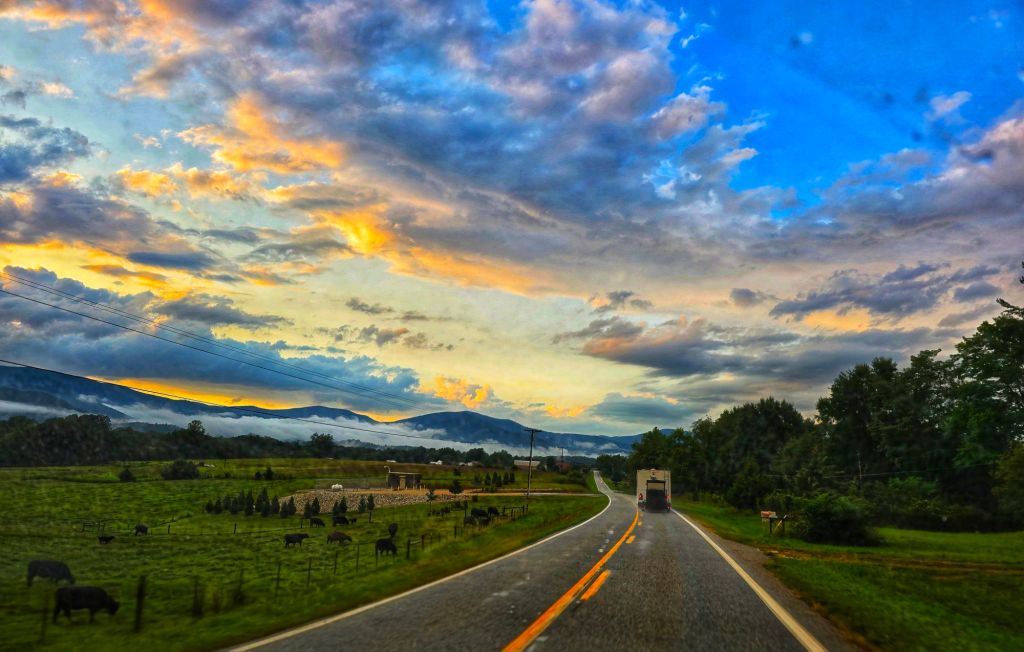
The Storm That Washed the Mountain

Summer ended in silence.
Not the peaceful kind.
The kind that creeps in like fog across the hills—soft, slow, and heavy.
The kind that makes everything look the same,
but feel different.

There was no final campfire.
No porch full of laughter.
No loud goodbyes or last-night chaos.

Just a storm.

The kind that settles over the mountain like a sigh.
Not loud. Not violent.
Just steady. Aching.
Like the sky itself was grieving.

And maybe it was.
Maybe it was mourning the end of what we carried all season.
Maybe it was finally letting go of the weight we never said out loud.

Because that storm—
It didn’t just fall.
It washed.
It bled through the cracks we’d patched too quickly.
It soaked through the spaces we never had time to feel.
And it left everything raw.

The road glistened.
The fields were quiet.
The mountain felt hollow.

Like it had been wrung out.

And maybe we had been, too.

Because this summer—
It cost us.

It cost late nights and early mornings.
It cost cracked hands and tired knees.
It cost pretending we were fine when we weren’t.
It cost silence from people we trusted to see us.
It cost the versions of ourselves we had to become just to survive.

And when it was over,
when the last walkie call faded and the last goodbye didn’t come,
there was only the storm.

Only the rain carving lines down the windows like tears we never had time to cry.
Only the sky, bruised with light, like it, too, had been holding everything in.

But after the storm, the mountain looked different.

Cleaner.
Emptier.
More honest.

Like it had stopped pretending.

And maybe that’s what endings really are—
not neat, not pretty.
But necessary.
A reckoning.
A chance to exhale everything we held too long.

It still hurts.
The shift.
The quiet.
The ache of not hearing your name over the radio.
The porch light that stays off.
The room that no longer smells like sweat and bug spray and sleep deprivation.

But healing doesn’t always come gently.
Sometimes it comes like a storm.
Sometimes it strips everything bare.
Sometimes it doesn’t ask permission.
It just breaks you open,
so something softer can grow.

And when it passes,
you’re not the same.

The mountain isn’t either.

But maybe,
maybe that’s the point.