Not Everyone Who Leaves Stops Loving It

A friend recently sent me a letter about camp leadership and the expectations that come with it, and I think part of me has been grieving it ever since.

Not because it was new information. Not because it shocked me. But because it finally gave words to something I have carried quietly for years.

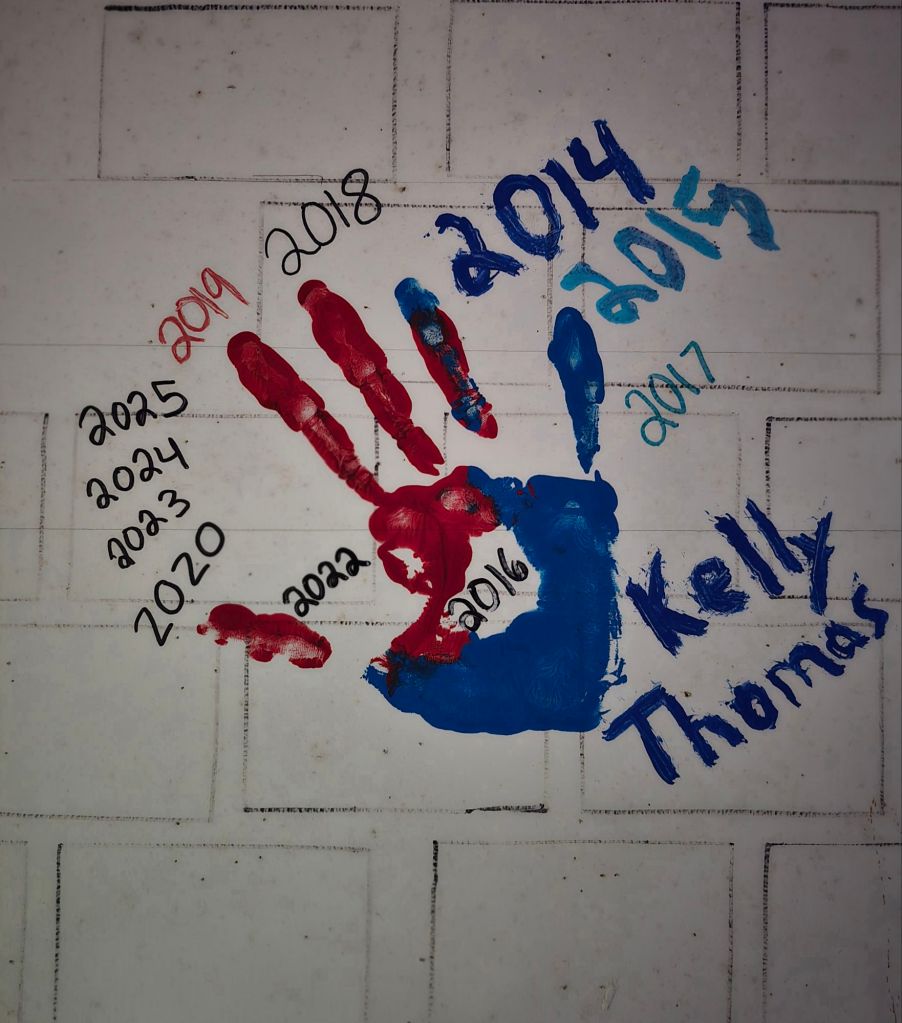
There is this unspoken thing at camp where people leave pieces of themselves behind long after they are gone. A certain laugh in the dining hall. A tradition they started. A way they made children feel safe. Some people become so deeply woven into camp that their absence never really feels like absence at all. They become stories people tell around campfires years later. Memories repeated so often they almost stop sounding human and start sounding holy.

And then someone new arrives.

Young. Nervous. Trying so hard.

And everyone expects them to somehow step perfectly into the shape of the person before them.

There’s something quietly cruel about being expected to carry a torch you were never taught how to hold.

At camp, leadership gets passed down like tradition. One person leaves, another steps in, and somehow everyone expects the next person to already know how to do it all. How to lead. How to comfort homesick kids. How to carry conflict gently. How to keep camp feeling magical while they themselves are exhausted. How to be dependable and cheerful and emotionally available every second of the day.

But confidence is not instinct. Leadership is not magic. And experience cannot be inherited through expectation alone.

Still, camp has this way of acting like it can.

And maybe the hardest part is that the comparisons rarely come from cruelty. Most of the time they come from love. Someone missing the people who raised them there. Someone remembering summers that meant everything to them. So they say things casually, never realizing how deeply those words land inside someone already struggling to feel enough.

“Well, so-and-so used to do it this way.”

“They were always really good at this.”

“Last year just felt different.”

And maybe they forget those people were once uncertain too.

Maybe they forget there was a time before they became “camp legends.” Before they knew how to lead chapel or calm a crying camper or hold everything together so naturally people thought they were born knowing how.

Because nobody remembers the becoming. Only the version that survived it.

And I think what broke a lot of us was trying to become whole beneath the weight of everyone else’s memories.

It was the feeling that no matter how much of ourselves we poured into camp, we were still standing in the shadow of people who had already become untouchable there. We gave everything we had to children and cabins and traditions while quietly wondering if anyone could tell we had no idea what we were doing.

I think about the versions of us sitting awake after lights out, emotionally hollowed out from giving all day long. Smiling until our cheeks hurt. Holding crying children while privately feeling like we were falling apart too. Listening to worship songs in chapels while wondering why we suddenly felt so unbearably alone in a place full of people.

Because camp asks people to give in ways that are hard to explain to anyone who has never lived it.

It asks for your patience. Your energy. Your softness. Your joy. Your ability to stay calm when children are crying and schedules are collapsing and your body is begging you to rest.

And the terrifying thing is that so many of us were willing to give it everything.

We loved camp enough to ignore our own exhaustion. Enough to keep showing up while our mental health got worse. Enough to convince ourselves that struggling meant we were weak instead of overwhelmed. Enough to believe that if we just gave more of ourselves away, maybe eventually we would finally feel worthy of being there.

I think there are people who have not returned to camp in years who still carry guilt every single summer when the season comes around. People who see photos online and feel their chest ache with homesickness for a version of themselves that no longer exists. People who miss camp so deeply it feels like grief, but also know going back would reopen wounds they barely survived the first time.

And that is such a confusing kind of heartbreak. To love something so much and still need distance from it. To miss a place while also recognizing it slowly consumed you. To realize the place that once made you feel most alive also taught you, quietly and over time, that your worth depended on how much of yourself you were willing to sacrifice for everyone else.

I do not think camp means to hurt people.

I think camp is made of beautiful, exhausted humans trying to recreate the magic they once survived themselves.

But sometimes that means the cycle repeats.

Young leaders arrive wanting desperately to belong, and before they have even figured out who they are, they are handed emotional responsibilities too heavy for their shoulders and expectations too large for their still-forming hearts. They learn quickly that the people who are loved most at camp are the ones who give the most. The ones who stay latest. Work hardest. Need least. Smile anyway.

And some of us did that until there was almost nothing left of ourselves outside of camp at all.

Not everyone who leaves camp stops loving it.

Some of us just finally realized we were disappearing there, and stepping away was the first time we chose to save ourselves instead of sacrificing ourselves for a place that taught us exhaustion was the same thing as devotion.

As Long as There’s Still a Mailbox

There was a rumor going around recently that the mail might stop someday.
Not tomorrow, not next week, but the kind of quiet talk people say like it’s inevitable — everything going digital, everything getting faster, everything needing less paper, less waiting, less space to hold things. Most people hear that and think about bills, junk mail, catalogs they never asked for.

I heard it, and all I could think was,
one day there might be a last letter.

Not the kind where you know it’s the last.
Not something marked with an ending.
Just the kind you send without realizing that someday there won’t be another envelope after it.

Letters have never been just letters to me.
They’re pieces of time you can hold in your hands.
Proof that someone stopped long enough to feel something, long enough to write it down, long enough to believe it was worth the effort to send. Ink takes longer than typing. Stamps take longer than hitting send. Waiting takes longer than refreshing a screen. And maybe that’s why it matters so much — because nothing about it is instant, so nothing about it feels careless.

For the last few years, sending mail has been one of the steadiest things in my life.
Not because life was steady, but because the letters were.
No matter how much changed, I could still sit down, pick a card, find a pen that worked, and write to someone who mattered.

And it was never just a letter.

It was photos from a random day that felt too important to keep to myself.
Polaroids with the colors a little off but the memory still right.
Receipts, pressed flowers, scraps of paper with things I meant to say but didn’t know how to fit into a sentence.
Little notes written at midnight.
Stickers I found and immediately knew who they belonged to.
Tiny pieces of my life folded in half, then folded again, then tucked carefully into an envelope like I was trying to make the distance smaller by filling the space with proof that I was thinking of them.

There’s something about sealing an envelope that feels different than ending a conversation.
Once it’s closed, you can’t change the words.
You can’t unsend it.
You just have to trust that what you wrote was honest enough, real enough, that when it gets opened on the other end it will still mean what you meant when you wrote it.

So when people talk about the mail changing, slowing down, disappearing someday…
it doesn’t sound like a small thing to me.

It sounds like someone telling me there might be a day where I can’t do this anymore.
A day where there isn’t a stamp to press into the corner.
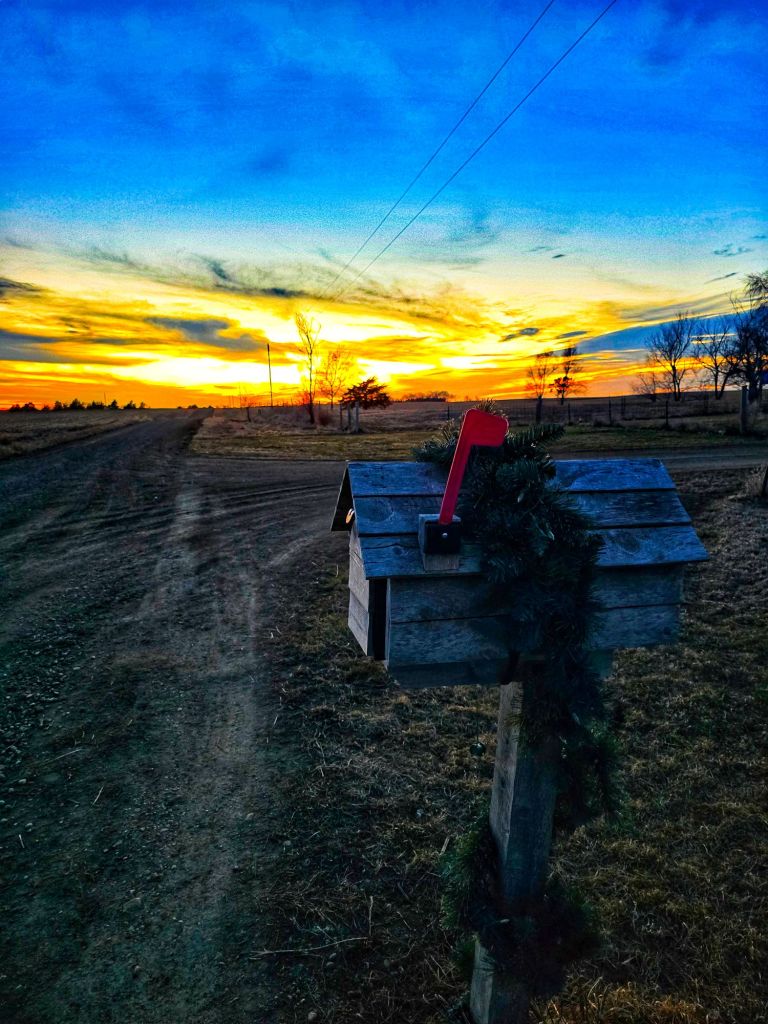
A day where there isn’t a mailbox waiting at the end of the driveway.
A day where I can’t slide a photograph into a card or tuck a little keepsake between the pages and send it across the miles like a quiet reminder that someone, somewhere, is still thinking about you.

And the truth is, the sadness isn’t really about the postal service.

It’s about what the letters mean.

They mean there was someone worth writing to.
They mean there was distance, but not so much distance that it couldn’t be crossed.
They mean there was a season of my life where love — or friendship, or whatever name you give to the people who feel like home — looked like ink stains on my fingers and envelopes stacked on my desk waiting for stamps.

They mean there was a time where I could hold something in my hands and know it was on its way to someone who mattered.

Maybe the mail isn’t going anywhere anytime soon.
Realistically, it probably isn’t.
But the thought that it could someday makes me realize how much of my life is tied up in something as simple as paper and ink and the belief that if you send something out into the world with enough care, it will find where it’s supposed to go.

One day there will be a last letter.
Not because the world ends.
Not because the feeling ends.
Just because life moves the way it always does, and seasons close without asking if you’re ready.

One day there will be an envelope I don’t send.
A photo I keep instead of folding in half.
A note I write and never seal.
A memory that stays in my hands instead of traveling across the miles.

And maybe that’s why I keep sending them now.
Why I keep adding one more stamp, one more picture, one more little piece of a life I don’t want to forget.
Why I keep tucking pieces of my days into envelopes like I’m afraid that if I don’t send them somewhere, they won’t feel real.

Because as long as there’s still a mailbox,
as long as there are still stamps,
as long as there’s still an address I know by heart,

I want there to be proof
that distance didn’t stop me,
that time didn’t stop me,
that life didn’t make me too busy to care.

I want there to be proof that I tried to reach them.

I Don’t Want To Be A Chore:

-This playlist is for the feeling of trying to be easy to love. For holding your words back, making your hurt smaller, pretending you don’t need as much as you do, just so no one feels like staying with you is work. It’s for the quiet fear that one day someone will realize loving you takes effort, and decide they’re too tired to keep trying. I don’t want to be a chore. I just want to be something someone keeps choosing without thinking about why.

•Wings by Birdy
•Porch Light by Noah Kahan
•You and Me by Cameron Whitcomb
•Crooked the Road by Mon Rovia
•Refuge by Dermot Kennedy
•Steady by Bella Kay
•Muscle Memory by Isabella Contadini
•Anyone’s Dream by bennie
•Sailor Song by Gigi Perez
•David by Lorde
•Dirty Liar by Ike Dweck
•You Can’t Follow by Alice Rose Lyn
•Youth by Daughter
•If I Get High by Nothing But Thieves
•Meet You at the Graveyard by Cleffy
•Empty (Ballad Version) by Brook Lynn
•Drown by Emilie Su
•Already Gone by Sleeping At Last
•Someone To Stay by Vancouver Sleep Clinic
•Let Me Follow by Son Lux