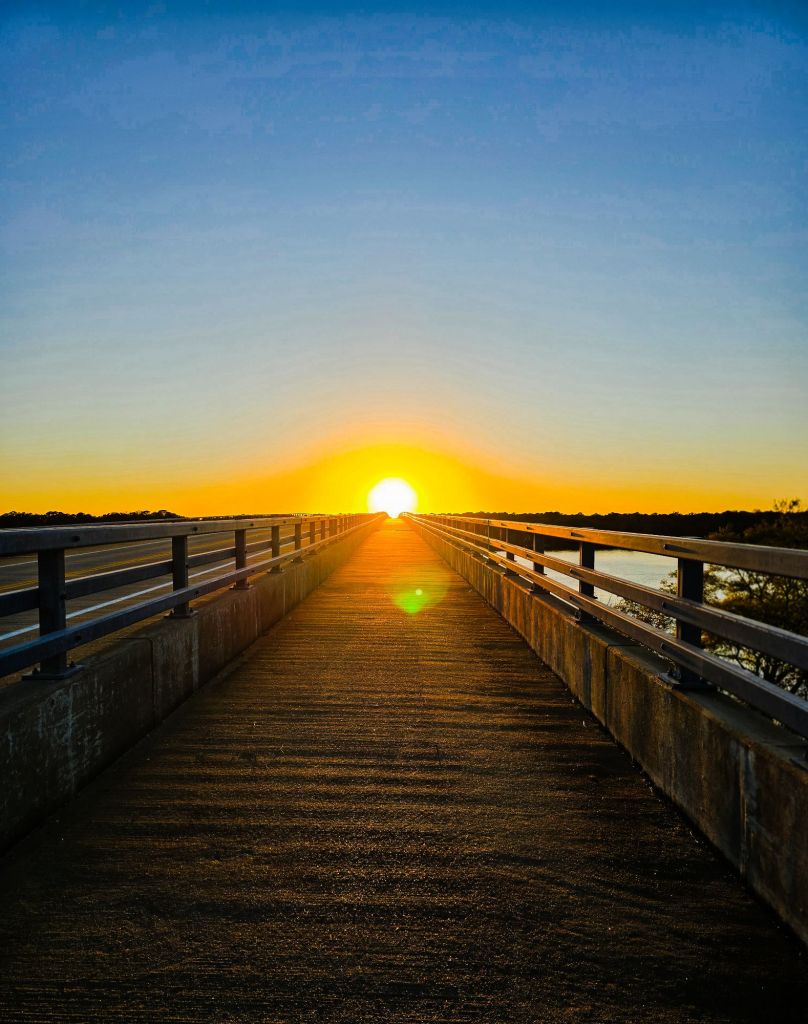
This past weekend, I ended eleven years of service to Crossroads. Eleven years of sunrises and sunsets, of hauling water jugs and fixing what broke. Of cleaning cabins before anyone noticed and showing up again and again when it would’ve been easier to walk away. It wasn’t just a job. It was a lifetime of love, disguised as labor. It was ministry in motion, where the sacred wore work boots and moved picnic tables in the rain.
And now, it’s over.
I’m in Williamsburg for the week, a soft pause between the chapter I just closed and the chaos waiting for me back home in South Dakota. This week is a gift, rest after 100-hour summer weeks and the kind of exhaustion that doesn’t just touch your body, but your spirit too. I’ve been given slow mornings, gentle light, the space to just be. I’ve let myself sleep in, take long showers, go still. And still, the ache lingers. Because grief doesn’t wait for the right time. It follows you into the quiet. It packs itself in your bag and sits on your chest when the sun goes down.
And I’ll be honest: I’ve been staying with my best friend-my sun-and I feel like a bad guest.
Not because she’s made me feel that way. Not once. She’s been warm and welcoming and patient, like she always is. But because I’m not fully here. My mind keeps drifting back to the mountain, to all the goodbyes I didn’t know how to say. My body’s tired in a way I can’t explain, and I find myself quieter than usual, hollowed out, still carrying the weight of all I just left behind.
I want to show up. I want to be more present, more fun, more “me.” But right now, I’m this version-tender, frayed at the edges, not quite landed. And I hate that I feel guilty for that. For not being easier to be around. For not matching her light. But she doesn’t ask that of me. She just lets me be. Even when I feel like a ghost in my own skin. Even when I don’t have the words.
It’s bittersweet. That’s the only word that fits.
I’ve said goodbye to people I might never see again. Packed up rooms I once knew by heart. Walked the porch one last time with my hand on the doorframe, like maybe it would remember me. I left with the wind, just another leaf carried off the mountain.
And now I’m here. Not at Crossroads, not yet home. Somewhere in between. Caught between the grief of what I’ve left and the chaos of what I’m returning to.
Because home in South Dakota isn’t quiet. It’s the farm. It’s nieces with tangled hair and loud laughter. It’s family dinners and dirt roads and sunrises over cornfields. It’s love, messy and full and loud.
And I’ll bring all of this with me. The stars I watched every night. The porch light that kept me going. The part of me that learned to serve quietly, fiercely, without needing to be seen.
Some chapters don’t close cleanly. Some goodbyes echo long after the doors are shut.
But I’m learning to breathe in the in-between. To let myself be carried by the people who love me, even when I feel like I’m too heavy. To trust that rest doesn’t make me a burden.
And I’m still writing.
Because even the guilt-laced pauses and quiet returns deserve to be remembered.
Even the aching rests in the homes of those who love us.
Even the in-between.
Even this.

 The Stars Take Note