What We Carry


Some people see five gallon buckets and think of chores they’d rather avoid.

They’re paint-splattered in the corner of a garage. Caked with drywall mud. Left behind after a job is finished and everyone’s already moved on. Cheap plastic. Replaceable. Something you grab when you need it and forget when you don’t.

On a farm, they become something else.

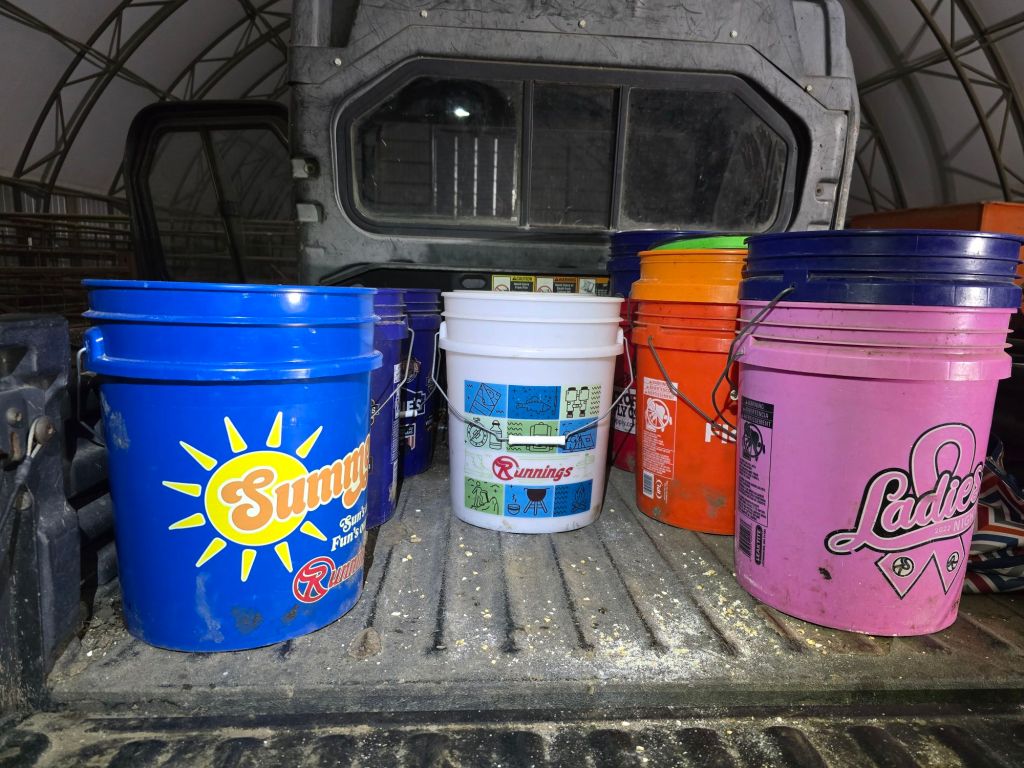
Five gallon buckets are essential to farming in a way that’s hard to explain until you live inside the rhythm of it. They’re there before the sun fully clears the horizon and still there when the light finally gives up. We use them to haul water to livestock tanks when hoses freeze solid or won’t reach far enough. We use the gator to carry feed from the barn to a small standalone trailer, buckets lifted and set down again, lined up inside where they’ll sit overnight, safe and dry, waiting. The next day, those same buckets are picked up again and carried into animal pens, one slow trip at a time, until everyone is fed.

Sometimes they hold tools. Sometimes they hold salt or minerals or whatever you needed to grab without thinking. Sometimes they’re empty, which somehow still feels like a promise, like they’re waiting for the next thing that needs doing.

They wear the work. Scratches from fences and trailer edges. Dents you don’t remember making. Plastic dulled by sun and weather. The handles squeak. One always seems to leak just enough to soak your boots, and you don’t remember which one it is until it’s already dripping. Dirt clings to the sides. Mud cakes the bottoms.

We have an array of them. Blues and whites and reds. Loud pinks that don’t belong anywhere else on the farm. Buckets with hardware store logos. Buckets from places we passed through once and didn’t think we’d remember. There’s a quiet joy in finding new colors and new designs, in something so practical still managing to feel personal. Like each one has a small story pressed into its sides.

They don’t get cleaned as often as they should. They don’t get put away neatly. They lean against barn doors, ride in the back of the gator, wait by gates and pens. And somehow, they’re always close when something breaks or spills or needs to be carried right now.

Farming is full of things like that. Tools that don’t look like much. Work that doesn’t photograph well. A life built from small, physical acts, repeated until your body remembers them even when your mind is tired.

Five gallon buckets aren’t romantic. They don’t make good stories on their own. But they live in the spaces between tasks. In the weight of water carried by hand. In the hollow sound of feed hitting the bottom. In the pause when you set one down, wipe your hands on your jeans, and look out across the pens before lifting it again.

Out here, they’re part of how the work moves forward. Part of how days are held together. Quiet witnesses to the fact that someone was here, doing what needed to be done, and will be back tomorrow to do it again.
The Brutal Beauty of Winter

We’ve reached that part of winter where South Dakota stops pretending.

The forecast has settled into a long stretch of below zero temperatures, the kind of cold that doesn’t care how tough you think you are or how many layers you pile on. This cold is brutal. It cuts straight through coats and sweaters like they’re suggestions, not protection. The wind doesn’t knock. It slams into you, steals your breath, and leaves you staggering for half a second while it whips loose snow into tiny glass missiles that sting your face and hands.

Any exposed skin burns instantly. Not metaphorically. Actually burns. Raw and angry and aching within seconds.

The cold doesn’t stay outside either. It seeps through the windows, through the walls, through the cracks you didn’t know existed. It settles into every room like an unwelcome guest, making the idea of leaving a warm bed feel almost offensive. Even inside, there’s always a chill riding the air, a reminder that winter is very much in control.

This is the kind of cold that makes your whole body ache. Your nose runs, and before you can even wipe it, it freezes, an uncomfortable, ridiculous reality of arctic temperatures. If your gloves get wet, they stiffen and harden, crusted with frost, no longer flexible or warm, just cold armor against colder air. Everything feels sharper. Heavier. More exhausting.

And yet, somehow, this depth of cold brings beauty with it.

Winter sunsets feel more vivid, like the sky is making up for everything it’s taken away. Colors burn brighter and linger longer, purples bleeding into pinks and oranges in ways that feel almost unreal against the frozen landscape. The air is clearer, crisper, and the light carries farther.

Frost clings to trees and fences, delicate and quiet, turning ordinary branches into something almost sacred. Every twig is outlined in white, every field dusted and still. The world feels paused, held in place by ice and breath and silence.

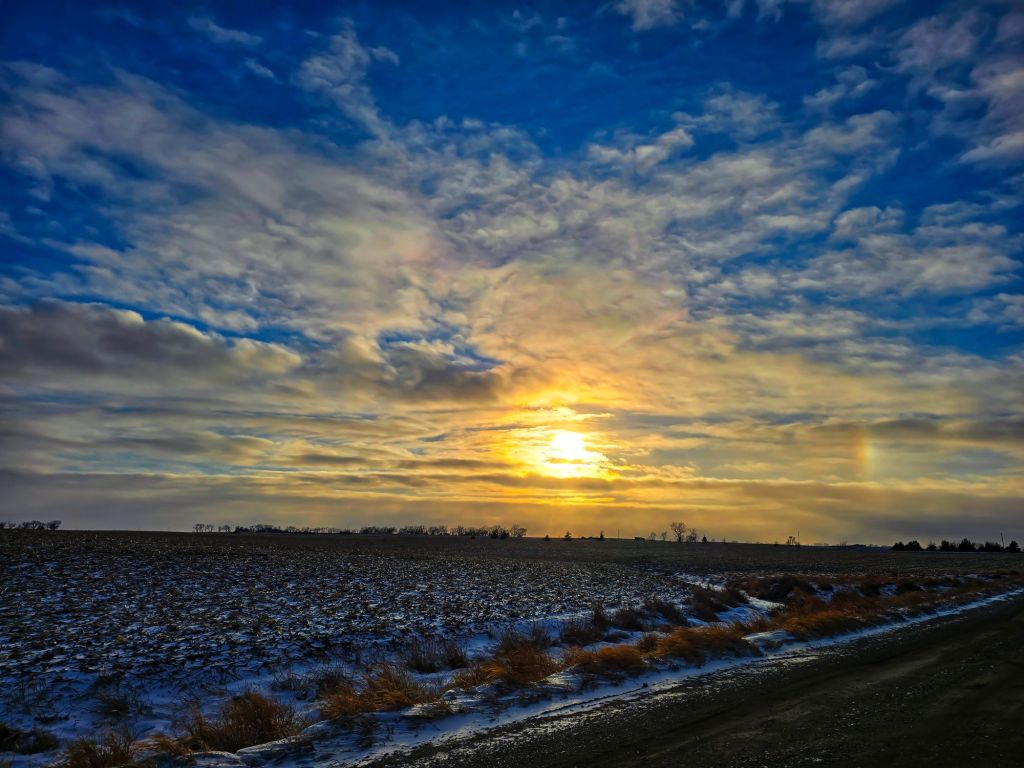
On days like these, the sky sometimes gifts us sun dogs. They’re bright spots of light that appear on either side of the sun, caused by sunlight refracting through ice crystals suspended in the atmosphere. Basically, the cold is so intense that the air itself sparkles. Halos form. Light bends. The sky shows off.

I saw them on Saturday, soft and glowing, but the sky was thick with clouds and I couldn’t get a good photo. Still, just seeing them felt like a quiet reward for enduring this kind of cold. Like winter saying, I know this hurts, but look what I can do.

I hate this level of cold. I really do. I hate how it makes everything harder and slower and more painful, how it drains energy before the day even starts. But I love what winter creates. I love that even in the most unforgiving conditions, there’s still beauty pressing through, still light bending and colors burning and frost turning the world gentle.

Maybe that’s why it sticks with me.

Because winter doesn’t soften. It doesn’t apologize. But every once in a while, it lifts the veil just enough to remind us that even here, especially here, there is something worth noticing.

And I hope I see it again soon.

Color At The Edge Of A Barren World

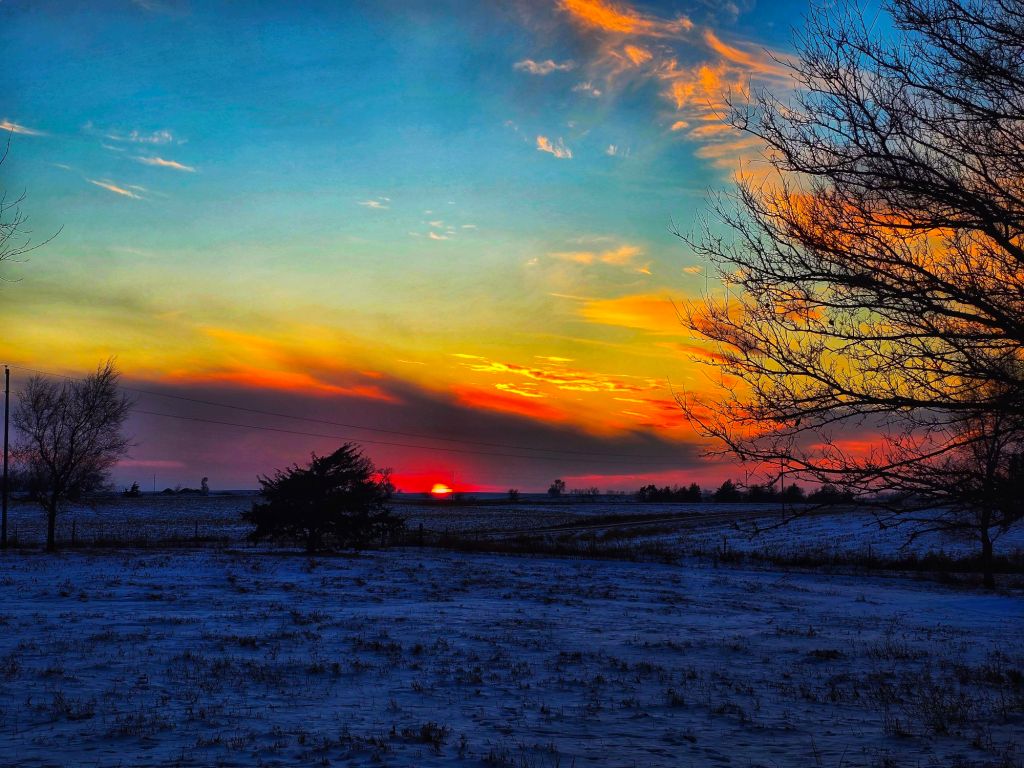
Tonight’s sunset wasn’t the boldest I have ever seen.
It didn’t streak across the sky in wild ribbons of fire or paint the clouds in colors that demand you stop everything just to feel alive. But after a week swallowed by grey, a week of barren fields and frozen winds and a world that looked like it had forgotten how to breathe, this small burst of color felt like a hand reaching out of the cold.

The kind of cold we had today doesn’t lend itself to beauty.
It bites through coats and gloves and makes your eyes water the second you step outside. It turns every inhale into a sting and makes even short walks feel like a punishment. The days have been long and heavy, the kind where the sky barely changes and everything feels muted or asleep.

That kind of winter wears on you.
It settles into the quiet places.
It makes you wonder if the sun remembers how to rise for you at all.

So when it finally pushed through tonight, just a thin line of orange pressed against the horizon, just enough pink and gold to soften the clouds, I felt something loosen inside me. Not joy. Not relief. More like a reminder. A small, almost trembling insistence that even the bleakest stretches eventually break.

There is something tender about sunsets like this.
The quiet ones.
The ones that don’t announce themselves.
The ones that look like they are offering whatever little light they have left, hoping it will be enough.

It hit me harder than I expected.
Maybe because everything has felt so dim lately.
Maybe because I am tired in the way winter makes you tired, tired in the way that comes from carrying invisible things for too long.
Maybe because every day has felt like it blends into the next, all of them silver and silent and cold.

But tonight, the sky remembered color.

It was not spectacular.
It was not loud.
But it was present.

And presence alone can feel like a miracle after so many days of nothing but grey. After so many hours of wind that cuts through you and fields that look lifeless and mornings that never fully brighten.

I stayed longer than I needed to, watching the last thin glow disappear behind the line of trees. The air stung my face. The cold settled deeper. But it felt worth it.

Because even if tomorrow returns to grey, even if the frozen world closes in again, at least I had this one moment. This one quiet offering of beauty. This one reminder that winter does not get the final word.

For a brief moment, color pushed through the cold.
For a brief moment, the world softened.
For a brief moment, I remembered that I am still here too.

Edges of Autumn

It’s a lazy Sunday. One of those early September days when the sun moves slowly and the sky hasn’t quite decided whether it’s done with summer yet. I was doing the usual, taking out the trash, scrubbing out corners of the house that are ignored on busy days, and trying to clean the week off my hands so I could step into the next one a little lighter. The kind of cleaning that isn’t just about wiping surfaces but about finding control in the little things. Breathing room. A fresh start.

Once the house was reset, I grabbed my empty Yeti bottles and made my way to Hunt Hall. Everyone knows that Hunt has the best water. We’re on a well system out here, so the water isn’t processed or filtered down to nothing, it’s cold, crisp, and tastes like it came straight from the heart of the mountain. And somehow, the sink at Hunt always hits better than the rest. Maybe it’s superstition. Maybe it’s just the way comfort attaches itself to places we return to often.

And that’s when I saw it.

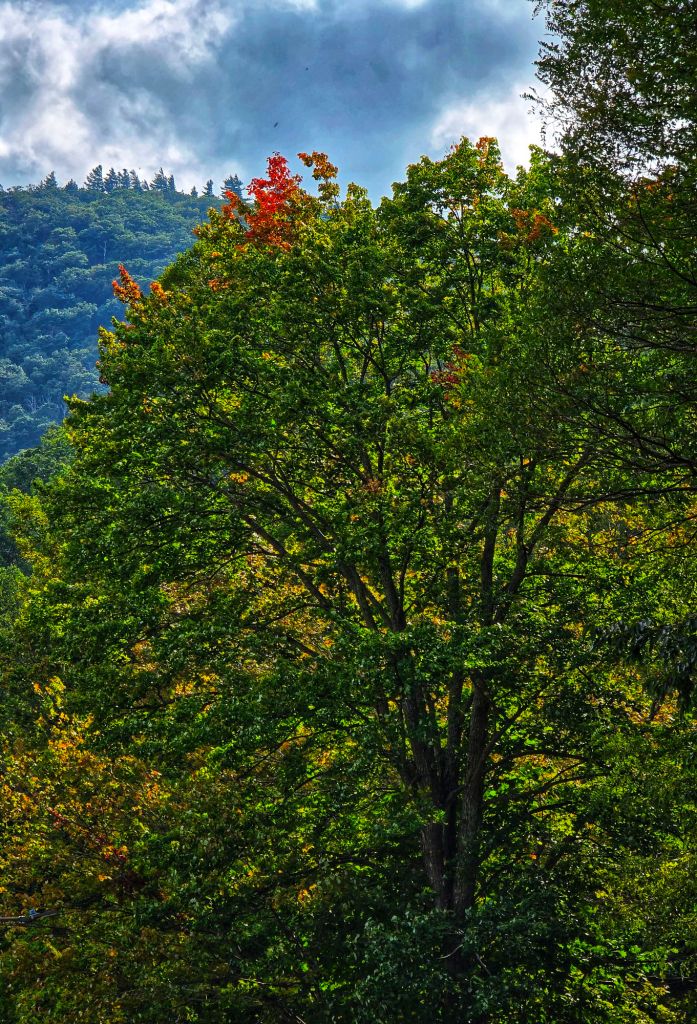
The tree outside Hunt Hall. Tall and quiet and waiting, like it has been all summer. But today, the sun caught the very top of it, just right. And in that light, I noticed it: the first blush of autumn. Just the top leaves. Just a few. Stained in red and orange like someone had taken a match to the edge of summer.

It stopped me.

It shouldn’t have. I’ve lived through enough Septembers to know the signs. The crispness in the mornings, the way the light hits differently, the first leaf that crunches underfoot when you weren’t even looking for it. But there was something about seeing it here, outside Hunt, in the middle of a chore I’d done a hundred times, that made me still.

Maybe it was the contrast. The way the top leaves flared with color while the rest of the tree held onto green. Like it wasn’t ready to let go yet. Like it was trying to hold both seasons in its branches for just a little longer. And maybe I understood that more than I wanted to.

There’s a lot we carry into fall. The weight of what we didn’t say over the summer. The tiredness that lingers even after we sleep. The goodbyes we didn’t mean to say but ended up whispering anyway. And still, we move forward. Still, the days get shorter. Still, the leaves change whether we’re ready or not.

But this tree, catching the light, reminded me that change doesn’t always arrive all at once. Sometimes it begins at the edges. Quietly. Slowly. With just a few leaves turning red while the rest of you tries to stay the same.

I think that’s how I feel right now.

I’m not fully in fall yet. Not ready for the rush of endings or the turning of pages. But I’m starting to feel it. The shift. The Knowing. That something is coming, and I won’t be the same once it’s here.

So I stood there, for a moment, water bottles forgotten in my arms, and let myself just be. With the tree. With the change. With the soft, burning light of a lazy Sunday.

And maybe that’s enough.
To notice.
To pause.
To begin to let go.

Even if it’s just one leaf at a time.