When The Seasons Turn

I keep thinking about the trees.

How they do not fight the seasons. How when the air shifts and the light tilts, they do not cling to what was. They turn bright burning gold and red and fire and then, when it is time, they let go.

I wish I was more like that.

Because the truth is, this season has been hard. Harder than I can say out loud most days. Full of change stacked on change until I could not tell where one ended and the next began. Everything I thought was steady cracked a little. Maybe a lot.

And in 21 days, it will be my last day at Crossroads.

I keep packing my things. Sorting piles. Deciding what goes home, what stays, what gets handed off to someone else. But it feels heavier than just boxes and belongings. It feels like I am saying goodbye to a version of myself I did not expect to lose this soon.

Because this was not the season I imagined.

I thought I would leave here full, overflowing with memories, with joy, with a sense of belonging I could carry with me. But instead, it feels like I have been scraped raw. Like this place took more out of me than I had to give.

And yet… Jesus was here.

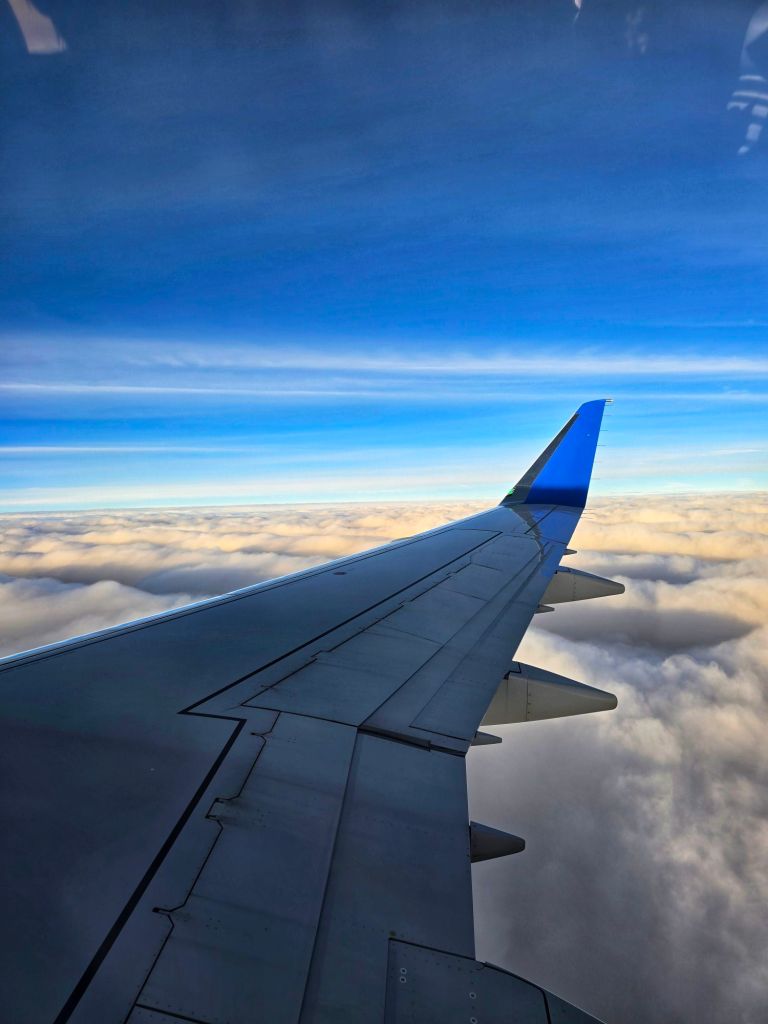
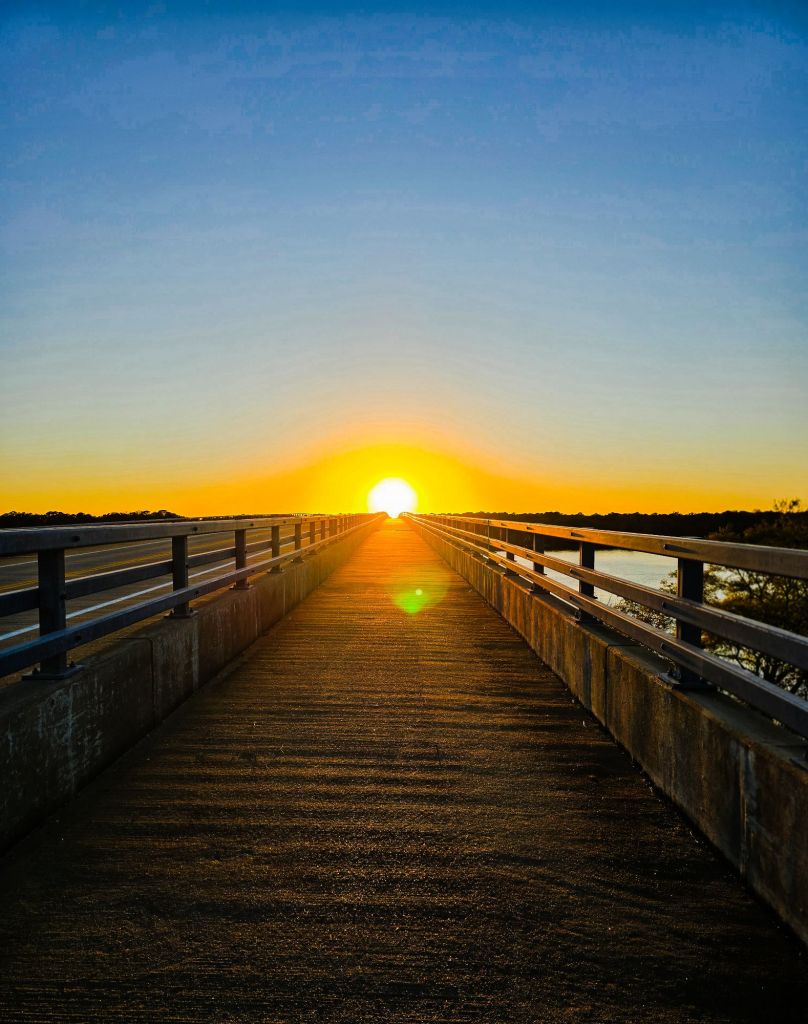
Not in loud, obvious ways. Not in ways that fixed everything or stopped the ache. But in the smallest mercies—like how the sky kept burning with sunsets even on the worst days. How the trees whispered of endings that could still be beautiful. How there was always just enough strength to make it through one more long, ordinary day.

And maybe that is what fall teaches us.

That endings can be holy. That letting go is not failure. That there is a strange kind of grace in the falling, the emptying, the trust that winter will not last forever.

The leaves do not fight it. They do not hold on, afraid of what is next. They blaze for a moment, and then they release—quietly, simply, like they know the same God who wrote spring into the world will keep His promise again.

I wish I trusted like that.

But right now, it just feels like goodbye.

And goodbyes have never come easy for me. Because it is not just leaving a place. It is leaving pieces of myself here, the laughter that came when I least expected it. The prayers whispered on nights when the silence felt heavy. The version of me that made it through even when she did not think she could.

Fall does not ask us if we are ready before it comes. It just sweeps in, shifts everything, strips the trees bare, and somehow calls it beautiful.

Maybe that is what this is.

So I am letting the days count down. I am watching the leaves turn and scatter. I am packing what I can, carrying what I must, and leaving the rest in God’s hands.

Because if the trees can trust Him with their seasons, maybe I can too.

Between the Leaves and the Letting Go

September doesn’t just bring a change in the weather.
It brings a shift in the soul.
A soft unraveling.
A quiet grief.

The days are still warm enough to pretend it’s summer,
but the wind doesn’t lie.
The light fades earlier now,
and the leaves have started to let go—
like even they are too tired to hold on.

And maybe I am, too.

This is my last season at camp.
October 18 will be the final day I call this mountain mine.
My last sunrise wrapped in fog.
My last trash run,
last time my name crackles through the walkie,
last time I move through these woods like they still belong to me.

And it hurts more than I thought it would.
Not just because I’m leaving,
but because I’ve already been disappearing.

Depression showed up slowly this season.
Not like a thunderstorm—more like fog.
Stealing joy in pieces.
Making everything feel far away.
I’m still showing up.
Still doing the work.
But some days it feels like I’m watching myself live from somewhere else.

The stars still catch my eye—I even took a photo the other night.
But the awe I used to feel has been quieter.
Less like wonder,
more like a memory trying to reach me.

This month is National Suicide Prevention Month.
And I think it matters to be honest.
I have been hurting.
I have been tired.
I have been thinking too much about vanishing.
And maybe you have too.

If you have, please hear me:
You are not broken.
You are not a burden.
You are not too much.
You are not alone.

And I’m learning—slowly, gently—that even in all this ache,
there are still things worth staying for.

Like hot coffee on the porch when the morning air turns sharp.
Like seeing your breath in October and remembering you’re still alive.
Like flannel shirts and cinnamon candles and letting yourself wear the soft things.
Like small bonfires with good people.
Like seeing a friend you haven’t in months and realizing they missed you.
Like baking something warm.
Like letting someone hug you, even when you don’t have the words.
Like a drive with the windows down and the music loud.
Like finding new things to try—maybe pottery, or painting, or just going on a walk when the trees start to flame.

Like looking up at the stars and whispering: I’m still here.

Because you are.
And that’s everything.

So no, I don’t have a perfect ending to this post.
Just this:
I’m hurting.
I’m healing.
I’m staying.
And I’m learning to believe there’s more ahead.
Not just endings.
But beginnings, too.

The leaves are falling.
But so are the stars.
And they do take note.

So if all you can do today is stay—
Stay.
And I’ll stay too.


If you’re struggling, please don’t stay silent.
You matter. You are needed here.

📞 988 Suicide & Crisis Lifeline (US)
Call or text 988 anytime. You are not alone.

📱 Crisis Text Line
Text HELLO to 741741 to chat with a trained counselor.

🌐 NAMI (National Alliance on Mental Illness)
Visit nami.org/help or call 1-800-950-NAMI (6264)

🧡 You are not a burden. Your life still holds light. Please, stay.

Edges of Autumn

It’s a lazy Sunday. One of those early September days when the sun moves slowly and the sky hasn’t quite decided whether it’s done with summer yet. I was doing the usual, taking out the trash, scrubbing out corners of the house that are ignored on busy days, and trying to clean the week off my hands so I could step into the next one a little lighter. The kind of cleaning that isn’t just about wiping surfaces but about finding control in the little things. Breathing room. A fresh start.

Once the house was reset, I grabbed my empty Yeti bottles and made my way to Hunt Hall. Everyone knows that Hunt has the best water. We’re on a well system out here, so the water isn’t processed or filtered down to nothing, it’s cold, crisp, and tastes like it came straight from the heart of the mountain. And somehow, the sink at Hunt always hits better than the rest. Maybe it’s superstition. Maybe it’s just the way comfort attaches itself to places we return to often.

And that’s when I saw it.

The tree outside Hunt Hall. Tall and quiet and waiting, like it has been all summer. But today, the sun caught the very top of it, just right. And in that light, I noticed it: the first blush of autumn. Just the top leaves. Just a few. Stained in red and orange like someone had taken a match to the edge of summer.

It stopped me.

It shouldn’t have. I’ve lived through enough Septembers to know the signs. The crispness in the mornings, the way the light hits differently, the first leaf that crunches underfoot when you weren’t even looking for it. But there was something about seeing it here, outside Hunt, in the middle of a chore I’d done a hundred times, that made me still.

Maybe it was the contrast. The way the top leaves flared with color while the rest of the tree held onto green. Like it wasn’t ready to let go yet. Like it was trying to hold both seasons in its branches for just a little longer. And maybe I understood that more than I wanted to.

There’s a lot we carry into fall. The weight of what we didn’t say over the summer. The tiredness that lingers even after we sleep. The goodbyes we didn’t mean to say but ended up whispering anyway. And still, we move forward. Still, the days get shorter. Still, the leaves change whether we’re ready or not.

But this tree, catching the light, reminded me that change doesn’t always arrive all at once. Sometimes it begins at the edges. Quietly. Slowly. With just a few leaves turning red while the rest of you tries to stay the same.

I think that’s how I feel right now.

I’m not fully in fall yet. Not ready for the rush of endings or the turning of pages. But I’m starting to feel it. The shift. The Knowing. That something is coming, and I won’t be the same once it’s here.

So I stood there, for a moment, water bottles forgotten in my arms, and let myself just be. With the tree. With the change. With the soft, burning light of a lazy Sunday.

And maybe that’s enough.
To notice.
To pause.
To begin to let go.

Even if it’s just one leaf at a time.

Me and the Moon (We’re Not on Speaking Terms)

I know she’s beautiful.
I know.

The way she rises over the trees, soft and gold like something out of a story. The way people talk about her like she’s this gentle, steady presence. Like she’s comforting. Like she belongs in poems and lullabies and quiet prayers.

And maybe she does.

But sometimes, I hate her.

I do astrophotography. And I love the stars, really love them. Not in a casual, “oh that’s pretty” kind of way, but in the kind of way that keeps you breathing when everything else feels too heavy. In the way where the night sky becomes a place to rest. A place where you don’t have to smile, don’t have to speak, don’t have to be okay. You just look up and remember that you’re still here.

And I wait for those nights. I wait for clear skies like some people wait for answers. I watch the forecast. I watch the clouds. I stand outside barefoot, camera in hand, hoping this will be the night the stars show up for me.

But if the moon is full, it’s over before it starts.

Her light spills everywhere. It’s too loud, too much. It drowns out the stars like they never mattered. Like they were never even there.

And I hate that feeling.
Knowing they’re out there, just hidden.
Like something I love is being kept from me.

I’ve tried to work around her. I’ve adjusted settings. Changed angles. I’ve tried to make peace with it. But the truth is, she ruins it. She takes what I came for and washes it away. And it’s not even her fault. She’s just doing what she does. Reflecting. Glowing. Showing up.

But it still feels personal.

Because I came out here for quiet. For wonder. For that ache that feels a little bit like hope. And instead I get this brightness that won’t let me in. And maybe it’s just a sky problem. Maybe it’s just photography.

But it feels like more than that.

It feels like every time I try to show up for something—something small, something sacred—it gets overshadowed. Like I get overshadowed. Like I’m always chasing the thing I love most, and something bigger, louder, brighter comes and takes up all the space.

I know it’s not fair to blame the moon.
But sometimes I do anyway.

And I know people would tell me to see her beauty too. To love the glow. To take pictures of her instead. But that’s not what my heart came looking for. My heart came looking for stars. For the hush. For that quiet kind of magic that reminds me I’m not alone.

And some nights, the moon makes me feel lonelier than anything.

But still, I keep going out.

Even when I know she’s there. Even when I know I won’t get the photo I want. I still step outside, still look up, still try. Because maybe there’s love in the trying. Maybe there’s something sacred in standing beneath a sky that doesn’t bend for you and loving it anyway.

Maybe one day I’ll figure out how to hold both.
The moonlight and the missing.
The soft and the sharp.
The ache and the beauty.

But for now, me and the moon?
We’re not speaking.

And honestly, I think that’s okay.

I’ll wait for the dark.
I always do.
The stars are worth it.

Sometimes, Adults Need Wonder Too

I went to the Virginia Beach aquarium today.

It’s not the most impressive one I’ve ever seen, but it has its moments. The marsh walk is peaceful. The layout flows okay. The shark tank is the kind that makes you stop for a while.

My nieces are in South Dakota. All three of them—12 months, 4, and 7. I miss them. A lot.

They’ve never been to a real aquarium. Just the little ones attached to zoos—small tanks, maybe a touch pool, a few turtles if you’re lucky. Not like this. Not with massive walls of glass and sharks sliding past like shadows from another time.

I kept thinking how much they’d love it.
How much I wish I could bring them here.

But I also realized I needed to be here alone.

I love being their aunt. I love answering a million questions, pointing things out, helping them see the world. But today, I needed to see it for myself. Not through their excitement. Not through their voices. Just… for me.

There was this moment at the shark tank.
It was dim and quiet, the water dark and full of slow motion. A shark drifted by, huge and calm, with light trailing down its back like silver. Schools of fish moved like constellations.

And for a little while, no one asked anything of me.
I didn’t have to hold anyone’s hand.
I didn’t have to read signs out loud or carry a bag or answer “why.”
I just stood there.

And it hit me—
How long it’s been since I’ve stood in front of something beautiful
and not had to explain it.

It wasn’t loud awe. It wasn’t big joy.
It was something quieter. Something slower.
Something I didn’t know I missed.

I think adults forget we still need wonder too.

We build experiences for kids—and that’s good. I’m not saying we shouldn’t. I want my nieces to grow up swimming in awe. But I think somewhere along the way, we start handing wonder off to the next generation like it’s no longer ours to hold.

But it is.

We still need to feel small in the best way.
We still need to be silenced by beauty.
We still need to stand in front of the deep blue and let it hush us.

Even if the moment only lasts a few minutes—before the noise returns,
before the yelling kid,
before the glass gets slapped and the magic slips away.

It’s still worth it.
It still matters.

Today reminded me I’m not just someone who gives wonder.
I’m someone who needs it too.

And honestly?
The sharks deserve reverence.
The turtles deserve peace.
And so do we.

The Storm That Washed the Mountain

Summer ended in silence.
Not the peaceful kind.
The kind that creeps in like fog across the hills—soft, slow, and heavy.
The kind that makes everything look the same,
but feel different.

There was no final campfire.
No porch full of laughter.
No loud goodbyes or last-night chaos.

Just a storm.

The kind that settles over the mountain like a sigh.
Not loud. Not violent.
Just steady. Aching.
Like the sky itself was grieving.

And maybe it was.
Maybe it was mourning the end of what we carried all season.
Maybe it was finally letting go of the weight we never said out loud.

Because that storm—
It didn’t just fall.
It washed.
It bled through the cracks we’d patched too quickly.
It soaked through the spaces we never had time to feel.
And it left everything raw.

The road glistened.
The fields were quiet.
The mountain felt hollow.

Like it had been wrung out.

And maybe we had been, too.

Because this summer—
It cost us.

It cost late nights and early mornings.
It cost cracked hands and tired knees.
It cost pretending we were fine when we weren’t.
It cost silence from people we trusted to see us.
It cost the versions of ourselves we had to become just to survive.

And when it was over,
when the last walkie call faded and the last goodbye didn’t come,
there was only the storm.

Only the rain carving lines down the windows like tears we never had time to cry.
Only the sky, bruised with light, like it, too, had been holding everything in.

But after the storm, the mountain looked different.

Cleaner.
Emptier.
More honest.

Like it had stopped pretending.

And maybe that’s what endings really are—
not neat, not pretty.
But necessary.
A reckoning.
A chance to exhale everything we held too long.

It still hurts.
The shift.
The quiet.
The ache of not hearing your name over the radio.
The porch light that stays off.
The room that no longer smells like sweat and bug spray and sleep deprivation.

But healing doesn’t always come gently.
Sometimes it comes like a storm.
Sometimes it strips everything bare.
Sometimes it doesn’t ask permission.
It just breaks you open,
so something softer can grow.

And when it passes,
you’re not the same.

The mountain isn’t either.

But maybe,
maybe that’s the point.

The Reach

Summer ended yesterday.
And I don’t even know how to explain the weight of that.

There was no final fanfare.
No clear moment that said this is the end.
Just silence.
Just stillness.
Just a walkie that didn’t call my name.

But all I can see is this photo.
Two TOs—suspended midair, reaching for a high five between two different ropes courses.
No one told them to do it.
No one asked them to.
They just reached.
Because they could.
Because they wanted to.
Because that’s what this place teaches you:
to stretch across what separates you and meet someone in the air.

And I think that’s the most honest picture of this summer I’ve got.

Because that’s what we did.
Over and over and over again—we reached.

We reached from the edge of burnout.
From behind fake smiles and tired jokes.
From cracked hands, sunburnt arms, knees that buckled halfway up the hill but climbed anyway.

We reached from silence—
not the peaceful kind,
but the kind that replaces care with absence.
The kind that makes you feel invisible.

We reached across leadership that didn’t show up.
Across jobs we weren’t trained for but did anyway.
Across cold sandwiches, hotter tempers, and schedules that forgot we were human.
Across every “just hang in there” from people who never stopped to check if we had.

We reached anyway.

We wrote letters with shaking hands.
We reset the dining hall after sixteen-hour days.
We hauled coolers in the rain, fixed what others broke, and made things work with duct tape, walkie calls, and the sheer force of stubborn love.

And most of the time?
No one saw us.
No one reached back.

But we reached anyway.

Because that’s what it means to love something bigger than yourself.
To believe in a place even when it stops believing in you.
To carry it—not because you’re unbreakable,
but because someone had to.

That reach?

It wasn’t a job.
It wasn’t a metaphor.
It was survival.
It was hope.
It was communion.

It was me.
And you.
And the ones who stayed.
Not just present.
But anchored.
Hands outstretched in the storm saying:
I’m still here.
I still care.
I’ve still got you.

And now it’s quiet.
The radios rest.
The coolers are stacked.
The gravel doesn’t echo.
And our bodies—finally—feel the weight we’ve been carrying for too long.

But the reach?

That doesn’t end.

That stretch between who we were in May and who we are now—
it’s longer than anyone will ever know.

But we know.
God, we know.

We earned every bruise.
Every scar.
Every late-night porch laugh that reminded us we were still alive.
Every whispered prayer spoken into a walkie-less sky.
Every cracked, holy moment pulled from the mess.

This wasn’t the kind of summer people post highlight reels about.
This was the kind that leaves a mark.
This was the kind you survive.

And we survived it.

We reached through it.

We became something through it.

And maybe… maybe that’s enough.

Summer 2025 ended yesterday.
And I am tired.
And I am broken in places no one sees.
And I am still reaching—
but this time, maybe for myself.
Because I’ve earned that too.

The Pamper Pole

So there’s this thing at camp called the Pamper Pole.
It’s one of our high elements—literally a 32-foot-tall telephone pole standing upright next to the river. Metal staples are nailed up the side like a ladder, and at the very top, there’s a tiny round platform. Barely big enough for your feet.

Some camps call it Hi-5. That name makes more sense, honestly, because the goal is to jump off the top and slap a rope hanging in front of you midair.
But we call it the Pamper Pole. I don’t know why. We just do.

Here’s how it works:
You get clipped into a harness, go through a safety talk, and then start climbing. First the ladder, then the staples. And the higher you go, the more the pole sways under you. Not enough to fall, but just enough to make your brain say hey, maybe this was a bad idea.
And when you get to the top? You’re supposed to stand. All the way up. On a tiny platform that feels even smaller than it looked from the ground.

Then you jump.
Outward. Toward a white rope.
You don’t grab it—you just slap it like you’re giving it a high five. Your arms are supposed to stay crossed over your chest so the harness can catch you clean. If you grab the rope, you’ll burn your hands. Learned that one the hard way.

The whole thing is challenge by choice. You never have to go all the way. You can stop at the ladder. Halfway up. At the top. You decide how far you’re willing to go, and no one pushes you past that. That’s the rule. And we actually mean it.

I’ve watched kids sprint up the pole and jump like it’s nothing. Ten times in a row, laughing the whole time.
And I’ve watched kids freeze two steps up. I’ve stood on the ground for half an hour, gently talking a camper through panic, tears, and silence—until they either jumped or climbed back down.
And honestly? Both moments hit just as hard.

There’s something beautiful about the ones who keep coming back to it, who jump over and over again like they’ve found a kind of joy up there. But there’s also something sacred about the ones who are terrified and still try anyway. Or those who don’t make it to the top but still show up. Still clipped in. Still gave it a shot.

The Pamper Pole isn’t really about the rope. Or the jump.
It’s about choice.
It’s about learning what fear feels like in your body and realizing you get to decide how much power it holds.
It’s about standing 32 feet in the air, knees shaking, heart pounding, and saying, Okay. I’m scared. But I’m still going to try.

I’ve done this dozens of times. Set up the gear. Clipped kids in. Held the rope. Coached them up and down.
And I’m still in awe. Every single time.
Of the courage it takes to try. Of the power in deciding for yourself what “enough” looks like.

The truth is, fear doesn’t make you weak.
Sometimes, it just means you’re standing on the edge of something that matters.
And bravery?
It isn’t always loud.
Sometimes it looks like shaking hands. A single step.
Or saying, “Not today—but maybe tomorrow.”

The Mountain Holds Their Story

We’re lucky enough to host two Kesem chapters here at Crossroads—University of Virginia and William & Mary. Last week, UVA brought their crew up the mountain. This week, it’s William & Mary’s turn. And while both groups carry the same mission, the same heart, each week unfolds differently. It’s the same story told in two different voices—and both are beautiful in their own way.

UVA’s week is loud and full of motion. It hums with energy, like the whole place is alive from sunup to lights out. They bring big games, big laughs, big love. You can feel their presence in every inch of camp—in the giant swing squeals, the chaos of the dining hall, the trail of glitter and joy they leave behind. It’s like sunlight—bright, wild, and impossible to ignore.

William & Mary’s week moves differently. It’s softer, steadier, more intentional. They bring warmth that creeps in slowly, like morning fog over the hills. It’s in the way they notice campers, really see them. The way they create space for conversation and quiet moments, while still bringing fun and laughter. Their energy doesn’t blaze—it glows. And it’s no less powerful.

But no matter who’s here, the thing that never changes is the transformation. We see kids show up guarded, unsure, holding their stories close to their chest. And by midweek, we see them splashing in the pool, laughing with their whole body, or sitting around the campfire in a circle of new friends, lit up by flame and safety. They start to feel like they belong. Like maybe they’re not so alone in this world after all.

And for us, as the host site—we get to witness that. We get to see college students give everything they’ve got for a week straight. We watch them pour themselves out in the smallest, most meaningful ways—braiding hair before breakfast, sitting with a homesick camper in the dark, yelling encouragement from the bottom of the zipline, laughing when they’re exhausted, making every single kid feel like they matter.

These two weeks always remind me why camp matters. They remind me what love looks like in real time.

It looks like water balloons and dance parties. Like whispered “you’ve got this” pep talks and messy friendship bracelets. Like catching a camper’s smile for the first time all week and knowing you helped make it happen.

At Crossroads, our mission is to create space to experience God. And in these weeks, we do. Not always in the traditional ways, but in the joy echoing off the hills, in the trust built over meals, in the way someone feels held—just as they are. Kesem’s time here is a living reminder that God’s love shows up wherever we make room for it.

This place is holy ground. Not because it’s perfect, but because it holds so much love.

And every summer, we are unbelievably grateful that Kesem chooses to bring part of their story here.

The End Before The End

We are nearing the end of another summer, and everything inside me feels it.

The mountain gave us a false fall this week—crisp mornings, soft wind, light that slanted a little differently through the trees. I stood in it one morning, coffee in hand, hoodie pulled tight, and for a second I thought maybe the world was trying to be gentle with us. Maybe it knew the unraveling had begun.

We have two weeks left. But the camp we knew is already fading.

The laughter is quieter now. The porch feels emptier. The rhythm we clung to—meals, moments, madness—it’s changed. We’re still running, still doing the work, but it’s more behind the scenes now. Hosting season has slipped in quietly, and we’ve shifted with it. Belay lines. Dining hall resets. Quiet glances exchanged in passing. Less ministry in the spotlight—more in the shadows.

We set the stage now. We sweep the floors. We stay up late and rise earlier, not for the grand moments but for the ones that go unseen.

And maybe that’s why it hurts more.

Because we’re still here, still giving, but the heartbeat of summer is fading—and it’s fading with us still in it.

Right now, I’m writing this from an empty office in the middle of UVA Kesem. Crossroads skeleton staff is on break, and all I can hear is the thump of a distant speaker as music spills from the field. It’s a weird contrast—how quiet it is where I sit, while celebration and movement still echo just outside.

It’s a fitting image for where we are. The party isn’t quite over, but we’re stepping back already. Preparing to let go.

The exhaustion is bone-deep. Soul-deep. The kind of tired that doesn’t just ache in your body—it seeps into your spirit. Like something you’ll carry long after you leave. But there’s also a quiet pride tucked into that fatigue, a knowing that you gave everything you had.

We always talk about how camp changes lives—and it does—but what doesn’t get said enough is how hard it is to come down from it. How hard it is to go from the deep connections formed under string lights and in sweaty dining halls back to the routines of school, work, and everyday life. The people we became here, the bonds we built, the long nights of laughter and tears and shared silence—they don’t always follow us back into the world.

That’s the bittersweet part.

The friendships we made feel like lifelines, like family. And now everyone is slowly packing up, returning to their homes and campuses, and corners of the world. Some of us will stay in touch. Some of us won’t. That’s just how life moves.

But right now, in this stillness—this moment between goodbye and real life—I’m choosing to remember it all. The messy, beautiful chaos. The moments of grace. The times we were too tired to stand but still showed up.

Because we did show up. In every weather. Every breakdown. Every last-minute reset. We stayed. We carried each other. We believed, even when it felt like we had nothing left to give.

Recovery week is coming, and I’m ready for it. My body aches. My mind is frayed. I need rest.

But before I let myself collapse, I want to honor the weight of this ending.

Because it meant something.

Because we meant something.

And we still do. Even here, in this quiet.