The Mountain Holds Their Story

We’re lucky enough to host two Kesem chapters here at Crossroads—University of Virginia and William & Mary. Last week, UVA brought their crew up the mountain. This week, it’s William & Mary’s turn. And while both groups carry the same mission, the same heart, each week unfolds differently. It’s the same story told in two different voices—and both are beautiful in their own way.

UVA’s week is loud and full of motion. It hums with energy, like the whole place is alive from sunup to lights out. They bring big games, big laughs, big love. You can feel their presence in every inch of camp—in the giant swing squeals, the chaos of the dining hall, the trail of glitter and joy they leave behind. It’s like sunlight—bright, wild, and impossible to ignore.

William & Mary’s week moves differently. It’s softer, steadier, more intentional. They bring warmth that creeps in slowly, like morning fog over the hills. It’s in the way they notice campers, really see them. The way they create space for conversation and quiet moments, while still bringing fun and laughter. Their energy doesn’t blaze—it glows. And it’s no less powerful.

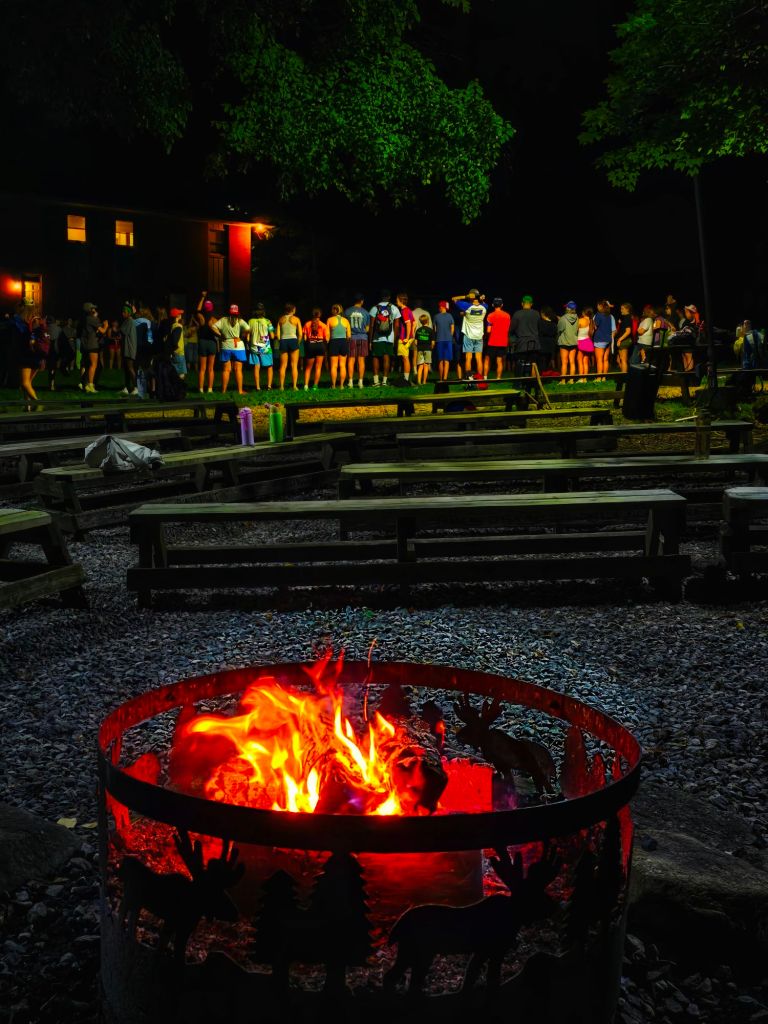
But no matter who’s here, the thing that never changes is the transformation. We see kids show up guarded, unsure, holding their stories close to their chest. And by midweek, we see them splashing in the pool, laughing with their whole body, or sitting around the campfire in a circle of new friends, lit up by flame and safety. They start to feel like they belong. Like maybe they’re not so alone in this world after all.

And for us, as the host site—we get to witness that. We get to see college students give everything they’ve got for a week straight. We watch them pour themselves out in the smallest, most meaningful ways—braiding hair before breakfast, sitting with a homesick camper in the dark, yelling encouragement from the bottom of the zipline, laughing when they’re exhausted, making every single kid feel like they matter.

These two weeks always remind me why camp matters. They remind me what love looks like in real time.

It looks like water balloons and dance parties. Like whispered “you’ve got this” pep talks and messy friendship bracelets. Like catching a camper’s smile for the first time all week and knowing you helped make it happen.

At Crossroads, our mission is to create space to experience God. And in these weeks, we do. Not always in the traditional ways, but in the joy echoing off the hills, in the trust built over meals, in the way someone feels held—just as they are. Kesem’s time here is a living reminder that God’s love shows up wherever we make room for it.

This place is holy ground. Not because it’s perfect, but because it holds so much love.

And every summer, we are unbelievably grateful that Kesem chooses to bring part of their story here.

The End Before The End

We are nearing the end of another summer, and everything inside me feels it.

The mountain gave us a false fall this week—crisp mornings, soft wind, light that slanted a little differently through the trees. I stood in it one morning, coffee in hand, hoodie pulled tight, and for a second I thought maybe the world was trying to be gentle with us. Maybe it knew the unraveling had begun.

We have two weeks left. But the camp we knew is already fading.

The laughter is quieter now. The porch feels emptier. The rhythm we clung to—meals, moments, madness—it’s changed. We’re still running, still doing the work, but it’s more behind the scenes now. Hosting season has slipped in quietly, and we’ve shifted with it. Belay lines. Dining hall resets. Quiet glances exchanged in passing. Less ministry in the spotlight—more in the shadows.

We set the stage now. We sweep the floors. We stay up late and rise earlier, not for the grand moments but for the ones that go unseen.

And maybe that’s why it hurts more.

Because we’re still here, still giving, but the heartbeat of summer is fading—and it’s fading with us still in it.

Right now, I’m writing this from an empty office in the middle of UVA Kesem. Crossroads skeleton staff is on break, and all I can hear is the thump of a distant speaker as music spills from the field. It’s a weird contrast—how quiet it is where I sit, while celebration and movement still echo just outside.

It’s a fitting image for where we are. The party isn’t quite over, but we’re stepping back already. Preparing to let go.

The exhaustion is bone-deep. Soul-deep. The kind of tired that doesn’t just ache in your body—it seeps into your spirit. Like something you’ll carry long after you leave. But there’s also a quiet pride tucked into that fatigue, a knowing that you gave everything you had.

We always talk about how camp changes lives—and it does—but what doesn’t get said enough is how hard it is to come down from it. How hard it is to go from the deep connections formed under string lights and in sweaty dining halls back to the routines of school, work, and everyday life. The people we became here, the bonds we built, the long nights of laughter and tears and shared silence—they don’t always follow us back into the world.

That’s the bittersweet part.

The friendships we made feel like lifelines, like family. And now everyone is slowly packing up, returning to their homes and campuses, and corners of the world. Some of us will stay in touch. Some of us won’t. That’s just how life moves.

But right now, in this stillness—this moment between goodbye and real life—I’m choosing to remember it all. The messy, beautiful chaos. The moments of grace. The times we were too tired to stand but still showed up.

Because we did show up. In every weather. Every breakdown. Every last-minute reset. We stayed. We carried each other. We believed, even when it felt like we had nothing left to give.

Recovery week is coming, and I’m ready for it. My body aches. My mind is frayed. I need rest.

But before I let myself collapse, I want to honor the weight of this ending.

Because it meant something.

Because we meant something.

And we still do. Even here, in this quiet.

Kesem: What Magic Leaves Behind

There’s always one week that stays with me more than the rest.

Not because it’s louder.
Not because it’s easier or harder or flashier. But because there’s something about it that slows time a little. Something sacred in the air.
Like even the trees pay closer attention.

That’s what it feels like when Kesem shows up.

For the past ten summers, UVA’s Kesem chapter has made their home at Crossroads. William & Mary has joined for the last two. I’ve worked eight of those ten summers, and still—every time they return, something shifts in me. Something settles. Something opens.

They serve kids who’ve been impacted by a parent’s cancer. That sentence alone holds more weight than most of us know what to do with. And yet they meet that weight with joy. Not the surface kind. Not the forced kind. But the deep kind—the kind that makes room for both laughter and grief in the same breath.

And they do it so well.

I don’t work program. I’m not in the cabins or leading the chants. I’m just… there. Background support. I haul things, fix what breaks, fill water coolers, and make sure tables and chairs show up where they’re supposed to. Most of it goes unnoticed. That’s okay. It’s not about being seen.

But I do see. And after eight summers of watching from the sidelines, I can say this:
Kesem doesn’t just change kids. It changes places. And it changes the people who make space for it.

There’s something about how they hold their week that feels different. Intentional.
Like every moment matters. Every kid matters. Every memory they create is stitched together with love and glitter and safety and purpose.

They use nicknames—every camper and counselor—and that’s not just a fun tradition, it’s a boundary. A shield. A way to let kids just be, without the pressure of the real world pressing in. No last names. No labels. Just who you are that week, in that space. Free.

And because of that, there are no names in this post. Just love.

I’ve watched campers show up small and unsure, and leave loud and sunburnt and covered in face paint. I’ve watched counselors pour themselves out without complaint, building joy from scratch, holding pain with reverence, letting kids be loud or quiet or both at once.

I’ve watched the way they love.
And I’ve tried to match it, in my own quiet way.

Maybe that’s the part that stays with me the most—the way everything they do holds space for both grief and wonder. The way no one has to choose between the two. The way they never pretend the hard parts don’t exist—but they don’t let them have the final say, either.

There’s a kind of sacred that happens when people show up like that.
And I think we forget how rare that is.

So to the UVA and William & Mary chapters—thank you. For coming back. For trusting us. For letting us be part of something this beautiful.

To the counselors—thank you for showing up fully, even when you’re tired. For dancing and crying and staying present in every in-between.

To the campers—you carry more than most people ever will. And still, you choose joy. You choose to come. You choose to laugh.

And that… that is brave.

This week always moves something in me. It reminds me why this work matters.
Why camp matters.
Why kindness and play and glitter and trust still have a place in the world.

Kesem means magic.
And after eight summers, I still believe it.

Playlist of the Day

Five songs. Five lines. Five versions of me.

• The Good I’ll Do — Zach Bryan

“Won’t you tell me that you need me? ‘Cause lately I’ve been needin’ someone to remind me.”

I don’t always know how to ask for what I need. I act fine. I show up. I keep moving. But sometimes I wish someone would just say it first. That they see me. That they want me here. That I’m not as replaceable as I feel.

• Lose It All — Isaac Mather

“You made it all okay / You carried me through / And I owe it all to you.”

This one’s for the quiet hands that held me when I didn’t deserve it. The people who never asked for recognition, who stood in the shadows but carried my weight anyway. I don’t say thank you enough. But I feel it. Every day.

• Tongue Tied — Chance Peña

“Wanna leave, but I freeze when my feet reach the door. Couldn’t be what I need.”

I’ve walked up to so many edges and backed away. Not because I didn’t want more — but because I didn’t know if I could hold it without falling apart. I get stuck between staying safe and wanting to risk it all for something real.

• doing my best — Hazlett

“I’m okay but kinda upset.”

Honestly? That’s just where I live most of the time. Not breaking, but not fine either. Just getting through it. Showing up when I can. Trying. It doesn’t look like much from the outside, but it’s a full-time job in here.

• Feels Like Home — Caamp

“There’s something in my heart, it feels like fire… and there’s a yearning in the river, and it feels like home.”

That ache — the one I can’t name—it’s always been there. A mix of homesickness and hope, longing and something sacred. I don’t know where “home” is exactly. But I feel it in certain places. Certain people. Certain songs.

If You Asked Me How Today Was

If you asked me how today was, I’d probably smile and say it was good.

Because that’s what you do. That’s what we’ve all been trained to do—wrap our days in something tidy and digestible. Say “good” like it’s a full sentence. Like it means something.

But if you dug deeper—really dug, which rarely anyone does—I’d probably pause. And then I’d tell you something more honest.

Today felt like a fall day, even though it’s still August.
The kind of weather that slips in quietly and makes everything feel just a little more bearable. The sky was soft. The breeze was kind. One of those rare moments where it actually felt good to exist outside. Shorts and a t-shirt. No sweat. No chill. Just… comfortable.

But I didn’t eat all day.
Not because I was trying to prove anything.
Not because I forgot.
Just because I didn’t feel hungry. And even if I had, I didn’t really have much to eat. My first and only meal was half a baked potato around six. That was it.

I spent a lot of time sitting in the truck, tucked out of sight.
Not hiding, exactly. But not trying to be seen either.
I let the music fill the space, but not too loud—just enough to blur the silence.
I listened to nature too. Birds, wind, trees. I watched the leaves dance like they were showing off. And for a second, I envied them—how effortless it all looked. How sure they seemed of their place.

I did some random little tasks.
Laundry. Ran fans to an upper cabin. Put things away. Kept the walkie on, in case I was needed. Stayed useful. Stayed quiet. Stayed moving just enough to feel like I had a purpose.

And all the while, I kept wondering:
Is this ever gonna be enough?

This day.
This role.
This rhythm of being helpful but unseen, steady but silent.

It’s hard to explain to people how doing “good” things can still leave you feeling hollow.
How you can check off boxes, keep the place running, carry things no one sees—and still go to bed feeling like a ghost.

I guess that’s why most people don’t ask for the real answer.
And maybe that’s why I usually don’t give it.

But today?
Today was good.
And also?
It wasn’t.

It was soft weather and quiet hunger.
A little music. A little wind.
Some tasks done in the background.
And a question that won’t quite go away.

2025 Summer Bingo (A Love Letter to the Version of Me That Still Tried)

Back in spring, when the days were still soft and I hadn’t yet unraveled under the weight of this place, I made a bingo board.
Twenty-five little boxes.
Each one a whisper: maybe this year will be different.
A scavenger hunt for joy. A quiet dare to hope.

It was a way to take control.
To remind myself that I am allowed to want things.
That life could be more than work and duty and holding everything together while no one notices I’m cracking.

I didn’t say it out loud, but I hoped this board might save me.
Or at least anchor me.
Give me something to reach for when everything else feels too heavy.

And at first, I tried.

Because here we are, deep into summer, and I’ve done a few things.
I got a new coffee. I climbed Cape Henry Lighthouse.
I started a blog. I backed the truck up to high ropes more times than I ever wanted.
I have plans to visit Belties Café.
I’ve hugged Megan. We’ve talked tattoos.
I’ve made frozen bubbles. I’ve watched the sun kiss the water goodnight.

But most of the board will stay blank.

Not because I didn’t want those things. I wanted them so badly.
“Design a greeting card.” “Go to a park.” “Fancy night out.” “Paint with someone.”
Tiny moments. Soft corners of a summer I thought I might finally get to enjoy.
But the truth is, when you are this tired—this stretched thin—
Even joy starts to feel like another thing you don’t have the strength for.

Life doesn’t care that I wrote it down.
Doesn’t care that I carved out space for whimsy and wonder.
Doesn’t care that I needed this.
It just kept asking more of me.
More work. More patience. More silence.
Less time. Less rest. Less me.

So no—I won’t fill the board.
I probably won’t even come close.

But maybe what I did do still matters.
Maybe the real squares were the ones I never wrote down:
“Didn’t quit when everything felt pointless.”
“Laughed when it hurt.”
“Got out of bed anyway.”
“Carried the weight so no one else had to.”
“Let myself hope, even if it broke my heart.”

I am so far past the point of needing this summer to be impressive.
I just needed it to be kind.
And maybe it wasn’t.
But I was.

To others. To the job. To the version of me that still showed up.
And I’m learning to count that, too.

So no, I didn’t win.
But I tried.
And I survived.
And that has to be worth something.

I Miss The Servant Heart

I’ve spent eleven summers working at camp. That’s most of my life. Most people don’t do something that long unless they really care about it—and I do. I care about this place deeply. I’ve poured myself into it, year after year. I’ve cleaned toilets and hauled trash. I’ve scrubbed moldy showers, filled water jugs until my arms were numb, and worked through thunderstorms, stomachaches, and heartbreaks. I’ve done it all, not because it was easy, but because I believed in what we were doing. Because I believed in Jesus. Because I believed that being a servant was the most important job anyone could have.

But something has changed.

It didn’t happen all at once, but I’ve been watching it happen for years now. Slowly, quietly, almost without anyone noticing. The servant’s heart is disappearing.

There used to be a culture of willingness here. If something needed to be done, someone jumped up to do it. If a job was hard, someone took it anyway. People didn’t ask, “Is this my responsibility?” They asked, “How can I help?” And it wasn’t for attention. No one expected praise. People served because they loved—because they genuinely wanted to reflect Jesus, who made himself nothing and washed his disciples’ feet.

Now I hear things like, “That’s not my job,” or “Do I have to?” Now people are quicker to pull out their phones than to pull on gloves. There’s more standing around than stepping in. There’s more frustration than initiative.

And it breaks my heart.

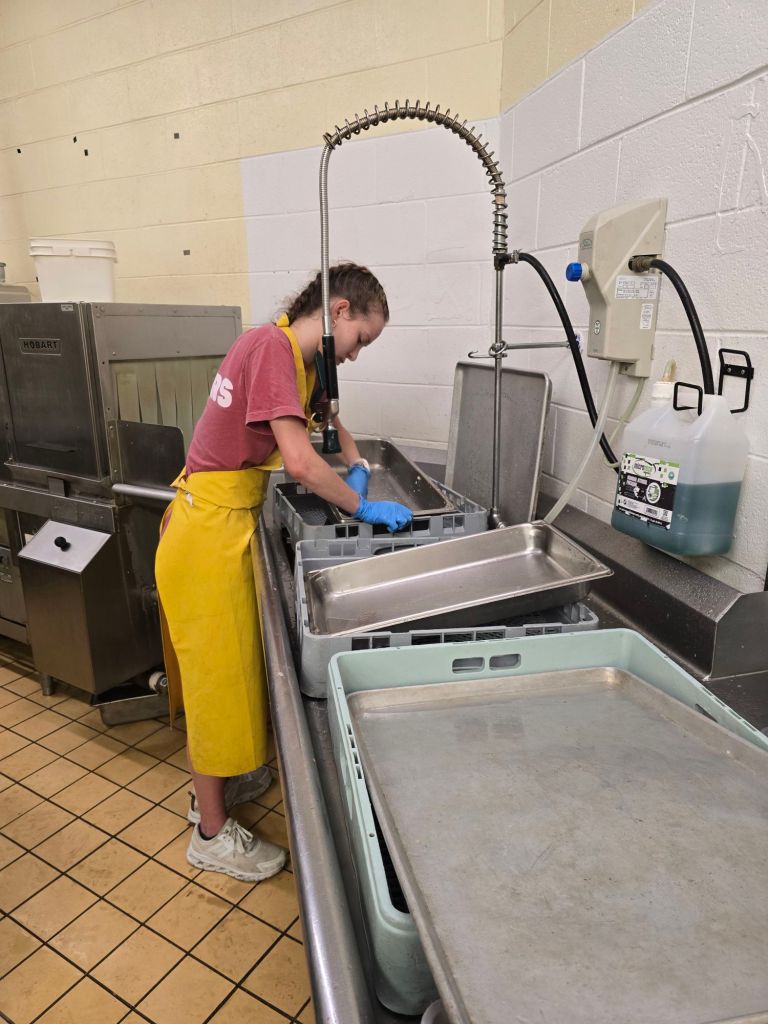
Because camp doesn’t run on convenience. It doesn’t run on vibes, or performances, or big personalities. It runs on people who are willing to do the work no one sees. It runs on sacrifice. On quiet, behind-the-scenes, messy work. On the counselor who cleans the bathroom for their co-counselor. On the support staff member who doesn’t complain when they’re assigned to the worst job. On the person who says yes, even when they’re tired.

Jesus never chased the spotlight. He didn’t wait for people to ask him to serve—he just did. He stepped into the dirt. He touched the sick. He fed the hungry. He knelt low and washed feet that were cracked and filthy. If Jesus could serve in that way, then who are we to act like we’re above any job?

I’m not saying this out of judgment. I’m saying it because I’m grieving. Because I remember what it felt like to be part of a team where everyone gave their all. Where the hardest jobs got done first, not last. Where people raced to help, not to hide. Where service wasn’t something we did—it was who we were.

And I know we can get back there. I still believe in this place. But something has to shift.

We have to talk about it. We have to model it. We have to stop glorifying only the fun parts of camp and start honoring the hard parts, too. We have to remind each other that scrubbing a bathroom can be holy. That taking out the trash can be worship. That filling a water jug can be an act of love.

Because the Gospel isn’t just preached in the chapel. It’s preached when you show up, when you stay late, when you serve someone who doesn’t even know you did it. That’s the heart of Jesus. That’s what this place is supposed to be about.

So yes—I miss the servant’s heart.
But more than that, I want it back.
I want us to remember what it means to serve like Jesus did—fully, humbly, and without needing to be seen.

Because this place won’t survive without servants.
And Jesus doesn’t need our performance.
He needs our yes.

Even if no one else hears it but Him.

Trained Operator

TO. Trained Operator.

Two letters that used to mean something. That used to carry something. Weight. Honor. Trust. A sacred responsibility you earned by showing up—really showing up. You stood in the field that first training weekend, sun on your back, sweat on your palms, and you listened. You practiced. You learned. And whether you understood it or not, you were handed something holy.

A life. Multiple lives.

Strapped into harnesses. Shaking on wooden poles. Trusting you to hold the line.

You were trained to belay someone off a telephone pole where they stand alone at the top, staring down fear, and then they jump. And you catch them. You were trained to clip into the sky, to stand where the trees meet wind and walk with a camper who can barely breathe. You were trained to be the one who whispers, “You can do this,” and means it.

You were trained to see them.

But somewhere along the way, we stopped acting like it matters.

Now I see TOs sitting on platforms like they’re thrones. Laughing. Watching. Phones in pockets. Sunglasses on. Zoned out or too locked in with each other to notice what’s happening ten feet away. A camper’s tears. A shaking hand. A frozen step. A silent plea for help.

You don’t see it. Or worse—you do, and you stay seated.

You were trained to move. You were trained to care.

And you don’t.

And it wrecks me.

Because I remember when the ones in harnesses looked at us and found steady ground. When Air TOs unhooked themselves without hesitation, crossed the ropes just to be near a camper who needed a voice beside them. When we ran to fear instead of pretending our job ended at the platform.

Now?

Now we call out “you’re good!” from forty feet away like it counts as comfort.

Now we wait until they fail to intervene.

Now we sit.

And God help me, I don’t know when we started confusing supervision for support.

But we did.

We’ve turned something sacred into something shallow. We hand out titles like prizes and forget to ask if the heart is still in it. We let people carry responsibility they no longer respect. We put campers’ trust in the hands of those who’ve forgotten how heavy it should feel.

This isn’t just about ropes. This isn’t just about belays and carabiners and platforms.

This is about what we’re becoming.

Because when we stop treating trust as sacred, when we let people freeze and fall and feel alone in a place that’s supposed to hold them—we’re not just failing at our jobs.

We’re breaking something.

Something deep.

And it makes me want to scream. Because it’s not supposed to be like this. It’s not supposed to be careless. Or cool. Or convenient.

It’s supposed to be costly.

It’s supposed to be service. Sweat. Knees bruised from kneeling on wood. Hands rope-burned from catching hard falls. Voices hoarse from speaking courage over and over again.

It’s supposed to mean being there.

And if that no longer moves you—

If fear no longer tugs your heart forward,

If frozen campers no longer stir you to step off your platform,

If the title matters more than the people—

Then take it off. Take off the harness. Step down. Walk away.

Because someone else still remembers.

And there is nothing more dangerous on this course than a TO who’s forgotten how to care.

Hidden In The Corners

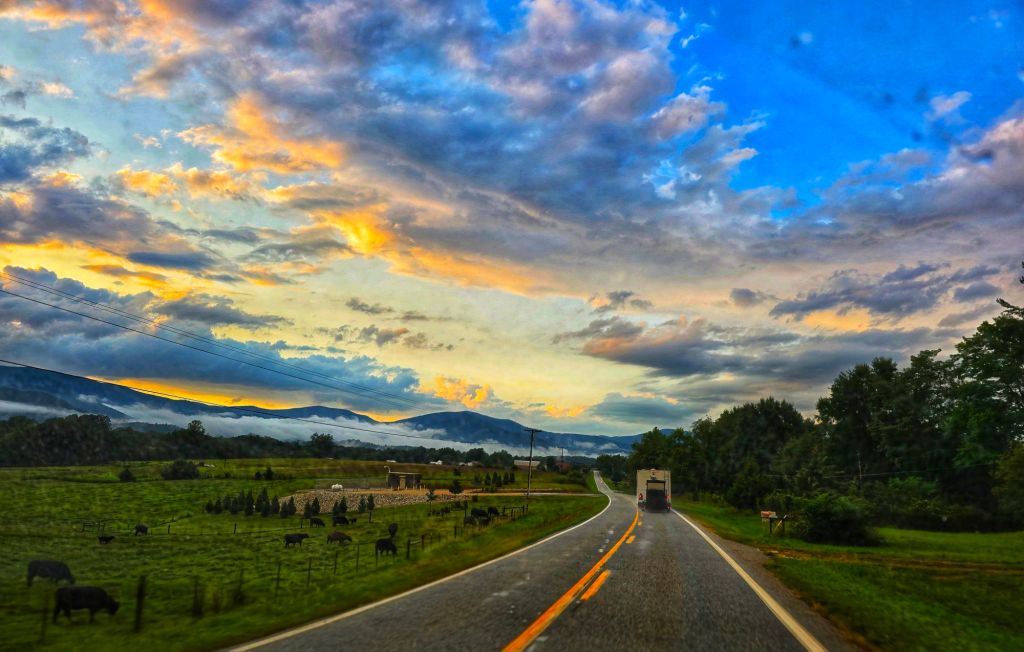
I took this picture at the end of one of those days. The kind where your body feels ancient before the sun even considers setting. Where every muscle aches with the kind of tired that sleep can’t fix. I couldn’t remember the last time I sat down, let alone stopped moving.

I’d been going nonstop since morning— soaked through with sweat and sudden summer rain,
mud on my shoes, hair stuck to my face, filling water coolers, hauling trash bags, fixing what broke before anyone even noticed it had fallen apart. It was the kind of day where the clock slips away from you, where all you can do is keep your head down and push forward because there’s still so much left to do, and you’re the one who does it.

But for a moment—
a rare, fragile moment—
I paused.

I looked up.

And there they were: clouds that held both weight and softness, like they’d been stitched together by lightning and lullabies. They glowed with that strange, storm-lit kind of light—
blue and gold and bruised gray all at once, like the sky couldn’t decide what it was feeling either.

So I took a photo. Something in me said remember this.
Not because it was perfect— but because it was real.
Because something about that sky made me feel like maybe there was more going on than I could see.

Later that night, I was curled up in bed—exhausted, sore, scrolling half-heartedly through my camera roll, just trying to tether myself to something good. And I stopped on that photo again.

And there it was.

A rainbow.

Faint. Hidden in the upper corner. Tucked into the clouds so subtly you could miss it if you weren’t really looking.

And I hadn’t seen it when I took the shot. Not even a flicker. But it was there. It had been there all along.

And I sat there—
staring at that quiet little arc of light—
and felt something crack open in me.

Because that’s what this week has been.
Heavy.
Demanding.
Full of things I didn’t sign up for
and moments that almost broke me.

But it also held things I missed in real time:
a laugh during a water break
that made the weight of the day feel a little lighter.
The wind kissing my face after the storm passed,
reminding me I’m still alive.
The hush of the world right before sunset—
when even the chaos takes a breath.
A rainbow I didn’t know was there
until the day was done.

It reminded me:
Sometimes beauty is quiet.
Sometimes grace doesn’t show up loud and obvious.
It’s tucked in corners,
woven into the ordinary,
soft and steady like a whisper.

And maybe that’s the whole point.

Maybe the good things are still there,
even when we’re too tired to see them.
Maybe the light doesn’t disappear—
it just waits patiently
for us to slow down long enough to notice.

So if your week has felt like mine—
exhausting, unrelenting,
a string of moments that asked too much—
please know this:

There might be a rainbow you missed.
There might be laughter still echoing somewhere in your memory.
There might be grace folded into the day you thought you barely survived.

You are not alone.
Not even close.

Hold on.
Keep going.
There’s still light.
Even in the storm.
Especially in the storm.

About Me

I never really know how to introduce myself. I could give you my name, where I’m from, what I do. But none of those things fully explain why I started this blog, or why I write at all.

So here’s what I’ll say instead:

I’m someone who writes when the world gets too loud, and I need somewhere soft to land. I take photos of the sky like it’s a language I’m still trying to learn. I believe in quiet strength, in staying soft, and in noticing the little things most people miss.

This blog—The Stars Take Note—is a place for the thoughts I usually keep to myself. For poems stitched from heartbreak and wonder. For the reflections I whisper at midnight. For memories that never really left. For beauty that still stops me in my tracks, even on the hardest days.

The name comes from a question I can’t shake: “Would the pine trees mourn? The stars take note?” And maybe, just maybe, somewhere, a river sings their sorrow.

I think we all want to believe that our presence matters, that someone would notice if we disappeared. This is my quiet way of saying—I see you. I hope you find something here that helps you feel seen too.

So… hi.

I’m glad you’re here.